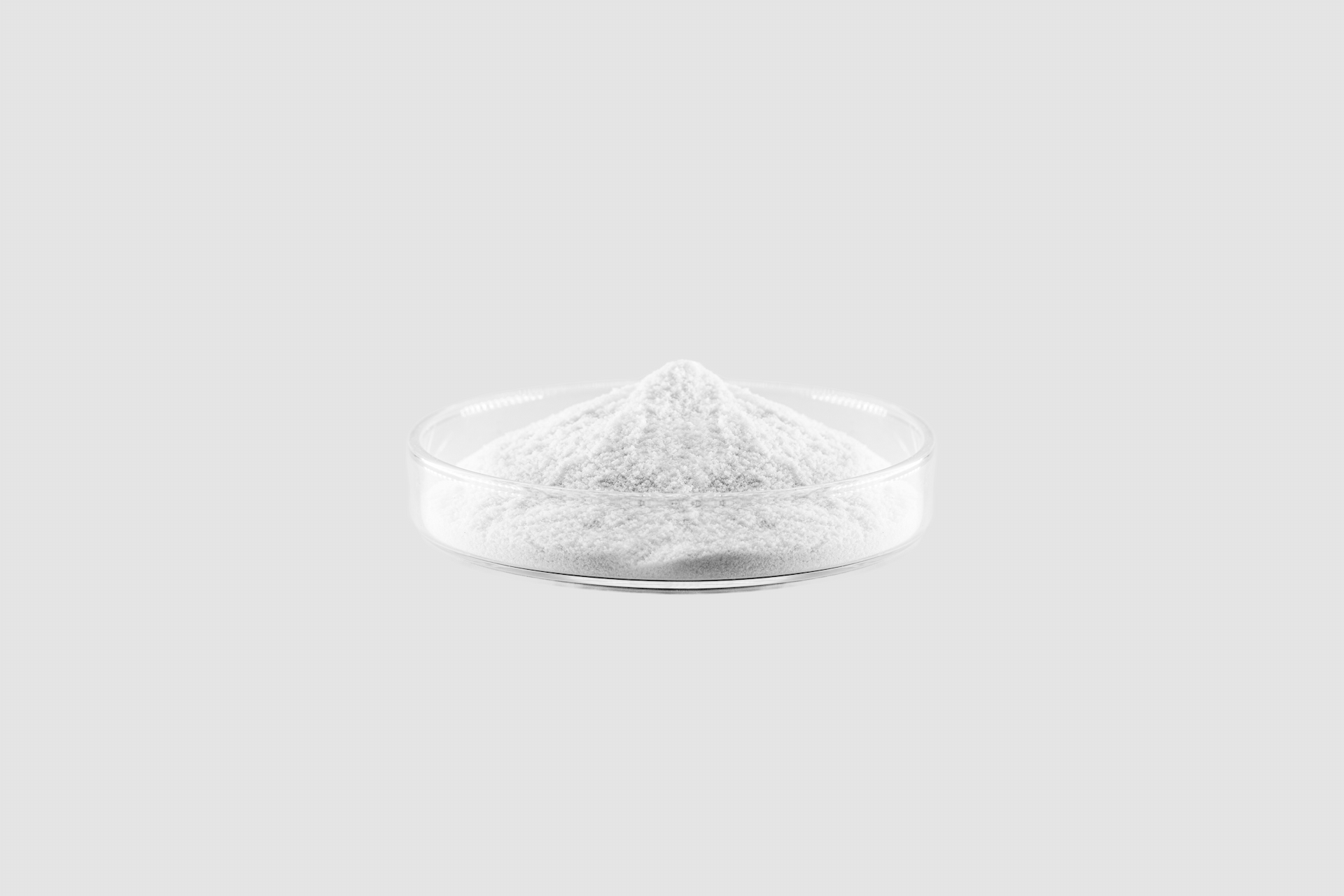
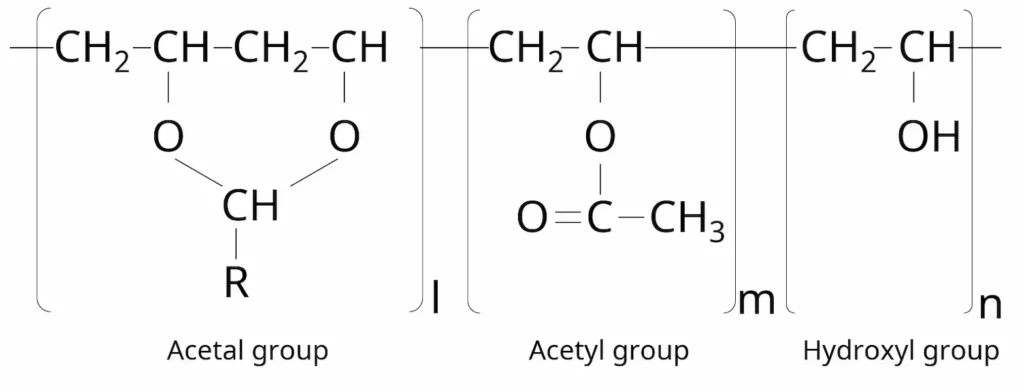
Polyvinyl butyral (PVB) is a thermoplastic functional resin produced by reacting polyvinyl alcohol (PVA/PVOH) with butyraldehyde under acidic conditions. Its primary benefits include excellent dispersibility, strong adhesion, and enhanced toughness, which can be optimized by modifying its formulation.
PVB is compatible with a wide range of organic solvents and can be blended with other resins, enhancing its adaptability across processing techniques and application demands. Due to this flexibility, PVB is widely used as an interlayer for laminated glass and as a binder in ceramics, adhesives, coatings, and inks, where a synergy of performance characteristics is essential.
SEKISUI Specialty Chemicals offers S-LEC™ B Series, a global PVB brand that balances dispersibility, adhesion, and toughness for specific applications and processing conditions. Based on experience in electronic materials and functional applications, the series supports material selection from a practical process perspective. The series guides dispersion of powders, sheet strength and flexibility during forming, adhesion to substrates, and impact on thermal processing steps.
Grades are available with different molecular weights, hydroxyl content, and glass transition temperatures (Tg), enabling comparative evaluation across ceramic type, solvent system, sheet thickness, and processing conditions. Detailed grade information is in the brochure.
S-LEC™ B Series offers solutions for diverse applications that demand a balance of dispersibility, adhesion, and toughness, with specific evaluation criteria tailored to each use. For fine ceramic components such as MLCC, prioritize powder dispersion, sheet strength, forming flexibility, and handling stability before firing. In adhesive applications, focus on compatibility with resins, adhesion, and stress relaxation. For conductive pastes, inks, and coatings, emphasize uniform dispersion, coating stability, and film uniformity.
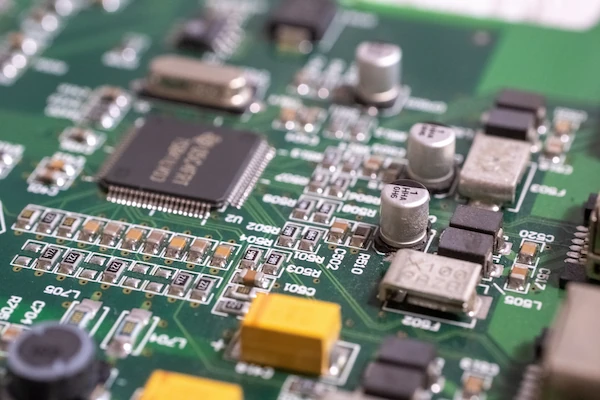
Fine ceramic components are produced through slurry preparation, green sheet forming or granulation, lamination, debinding, and firing. Binders must provide uniform powder dispersion and slurry stability, along with sheet strength and flexibility during forming, adhesion during lamination, and stable debinding before firing. Because improving one property can limit another, selection should consider the entire process.
S-LEC™ B Series offers grades with different molecular weights and hydroxyl, acetal, and acetyl group balances, enabling comparative evaluation by ceramic type, solvent system, target sheet thickness, and process temperature.
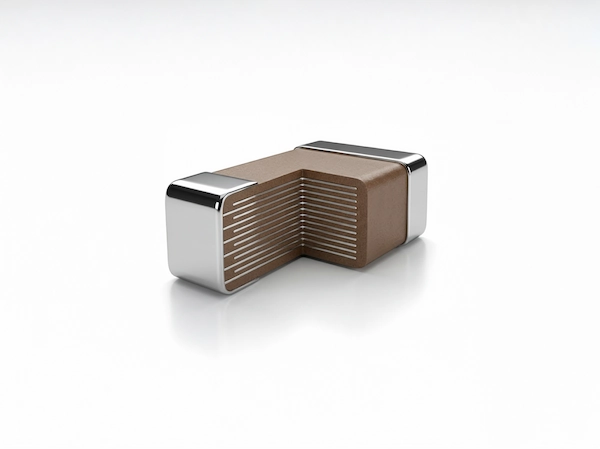
MLCC manufacturing involves precise steps: dielectric green sheet forming, inner electrode printing, lamination, firing, and outer electrode formation. For dielectric layers, key criteria include powder dispersion stability, sheet strength and flexibility, resistance to chipping and cracking during lamination and cutting, and clean debinding.
S-LEC™ B Series leverages the dispersibility, adhesion, and toughness of PVB to support stable green sheet forming and better handling. We also offer S-LEC™ SV Series for inner electrode pastes and S-LEC™ AS Series for outer electrodes, supporting material selection that considers downstream processes.
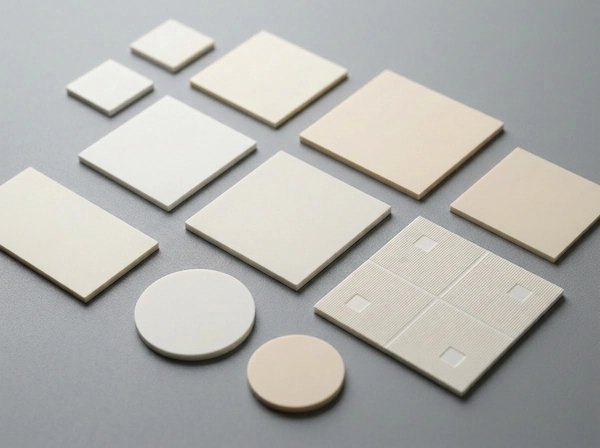
Heat dissipation substrates made from aluminum nitride (AlN) or silicon nitride (Si₃N₄) require control of sheet strength, handling, debinding residue, and fired substrate quality across dispersion, green sheet forming, punching, transfer, debinding, and firing.
The PVB-based S-LEC™ B Series is a candidate when green sheet strength, flexibility, and lamination adhesion are priorities. For debinding under low-oxygen conditions such as nitrogen or vacuum, or where moisture effects must be minimized, S-LEC™ AS Series, a specialty acrylic binder, is also an option. We propose comparative evaluations based on powder type, solvent system, and debinding conditions.
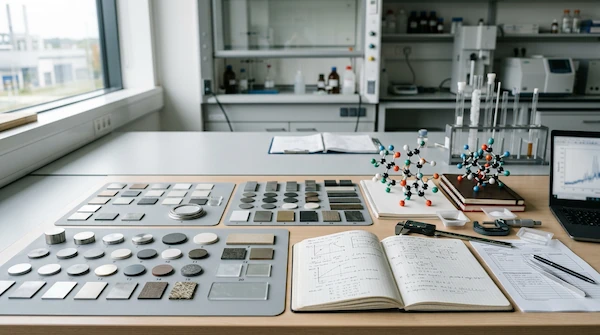
Beyond binder applications, S-LEC™ B Series can be evaluated as an additive for modifying thermosetting resins such as epoxy. In epoxy adhesives and encapsulants, the challenge is to suppress cracking and delamination caused by thermal stress or impact while maintaining hardness and adhesion.
The molecular structure and hydroxyl groups of PVB help balance toughness, interfacial adhesion, and stress relaxation while retaining rigidity. Potential uses include CFRP matrix resins and CASE applications. Because PVB does not behave as a full elastomer, comparative evaluation for your specific objective is recommended.

When selecting PVB for your application, assess how dispersibility, adhesion, and toughness align with your process requirements.
Dispersibility ensures uniform mixing of ceramic powders, fillers, and pigments, resulting in a stable slurry or paste. Adhesion forms reliable interfaces with metals, glass, and ceramics. Toughness adds strength and flexibility, reducing cracking and chipping.
Also, check compatibility with solvent-based processes and suitability for thermal treatment during selection. Physical properties of S-LEC™ B Series are shown for reference and vary by grade.
| Item | Unit | Condition | Measured Value | Test Method |
| Moisture Content | wt.% | ― | ≤3 | Heat-drying moisture analyzer |
| 10% Solution Viscosity | mPa・s | 20℃ | 50~220 | Ethanol/Toluene (1/1) solution; rotational viscometer |
| Glass Transition Temperature | ℃ | – | 71 | DSC |
| Solvent Solubility | ― | Ethanol | Soluble | Resin concentration: 5 wt.% visually checked after dissolution |
| Acetone | Soluble | |||
| Ethyl Acetate | Soluble | |||
| Toluene | Partially Soluble | |||
| Xylene | Insoluble | |||
| Terpineol | Soluble | |||
| Elastic Modulus | MPa | 23℃ | 960 | Plasticizer-free film; tensile test |
| Elongation at Break | % | 23℃ | 240 |
Values shown are measured for a representative medium-molecular-weight grade of S-LEC™ B Series and are not guaranteed.
To reduce solvent use and improve working environments, many manufacturers are switching to water-based materials for ceramic binders, coatings, adhesives, and inks. Water-based processes require more than solubility: substrate adhesion, dried film strength and flexibility, and stable dispersion of pigments, ceramic powders, and fillers.
S-LEC™ KW and KX Series are water-soluble polyvinyl acetal resins that retain many hydrophilic hydroxyl groups, while their acetal structure contributes to adhesion and film toughness. Choose KW Series for aqueous solutions or water-based dispersants, and KX Series when solubility in both water and alcohol is required. For solvent-based processes, use the B Series.
When considering PVB, other binder materials, such as PVA/PVOH and acrylic resins, are viable alternatives. PVA/PVOH handles well in aqueous processes, but you must evaluate moisture absorption and water resistance for your application. Acrylic resins offer design flexibility; however, you need to balance dispersibility, adhesion, flexibility, and thermal decomposition based on use.
PVB works well in solvent-based processes and enables easy balancing of performance properties. Choose the material based on your processing conditions and target performance; always evaluate under actual use conditions.
Q. What types of solvents are compatible?
A. S-LEC™ B Series is soluble or compatible with many organic solvents. Solubility varies depending on the grade, please refer to the brochure for details.
Q. How does PVB differ from PVA/PVOH or acrylic resins?
A. While the comparison depends on the application, PVB is often selected for its balanced dispersibility, adhesion, and toughness, particularly in solvent-based processes. PVA/PVOH and acrylic resins are also viable options and should be evaluated based on processing and performance requirements.
Q. What information do I need to request a sample evaluation?
A. Please provide application details, substrate type, solvent system, process conditions, required properties, and current challenges. More detailed information helps narrow down suitable grades and evaluation conditions.
Q. Where can I find detailed property data?
A. Representative properties and selection guidelines are available in the brochure. Final suitability should be evaluated under actual processing and formulation conditions.
Q. How do I choose between the S-LEC™ B Series and the KW/KX Series?
A. The choice mainly depends on your solvent system. For solvent-based processes that require a balance of dispersibility, adhesion, and toughness, the S-LEC™ B Series is a strong candidate. For water-based processes, consider the KW/KX Series, which are water-soluble polyvinyl acetal resins. The KW Series suits aqueous solutions and water-based dispersant applications, while the KX Series is an option when solubility in both water and alcohol is required. Suitability depends on your formulation and process conditions, so please share your application, solvent system, and process details for grade recommendations.