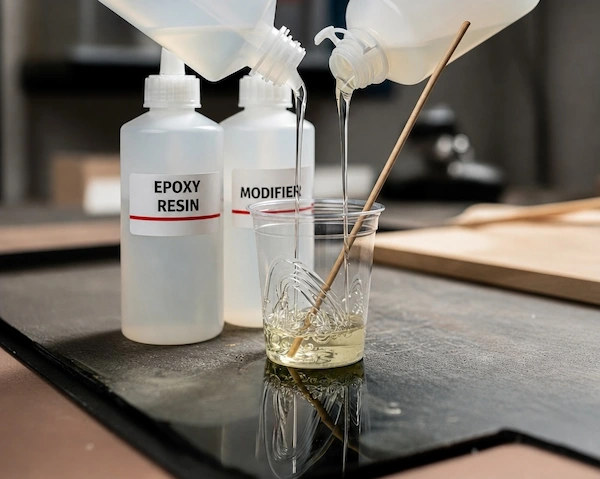
Epoxy resins are used in adhesives, encapsulants, and coatings for their strong adhesion, durability, and electrical insulation. However, their stiffness after curing can cause cracking and delamination under thermal stress, vibration, or when substrates have different thermal expansion coefficients.
SEKISUI Specialty Chemicals offers S-LEC™ BK Series, a PVB-based material for modifying epoxy. This series uses PVB’s structure to balance toughness, adhesion, and stress relaxation in cured systems. It gives formulators flexibility to keep rigidity and improve crack resistance.

Epoxy systems for adhesives and encapsulation need to be strong, tough, heat- and moisture-resistant, and stable after curing. Processability, such as viscosity control and compatibility with curing conditions, is also important. Materials are tested under application-specific conditions, including adhesion, thermal cycling, and environmental reliability.
Unmodified epoxies excel in adhesion and hardness, but their high modulus can cause brittle fracture or interfacial failure under stress. Rubber or silicone modification can help, yet often reduces heat resistance, mechanical strength, or formulation flexibility, so these trade-offs must be considered for each use.
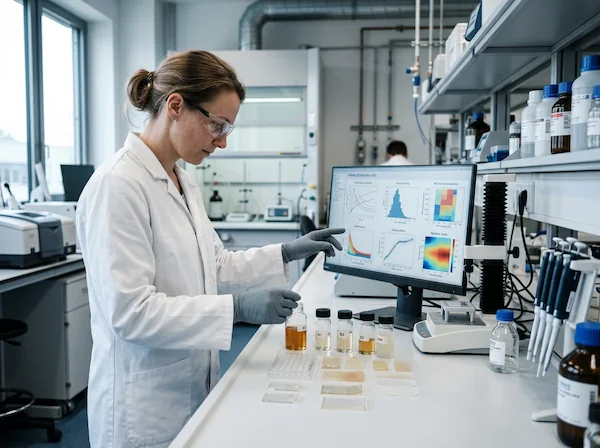
In epoxy formulations, greater strength can increase the risk of cracking, while greater flexibility may lower resistance to force or heat. Plain epoxies stick well and are hard, but stress from heating, impact, or expansion causes cracks and splits over time.
S-LEC™ BK Series has hydroxyl groups and a carefully controlled microstructure after curing for balanced performance. These help with toughness, sticking power, and stress relief while maintaining the needed stiffness. Formulators can explore ways to make materials last longer under tough use conditions. SEKISUI tests show better impact strength than plain epoxies, based on the mix and test methods used.
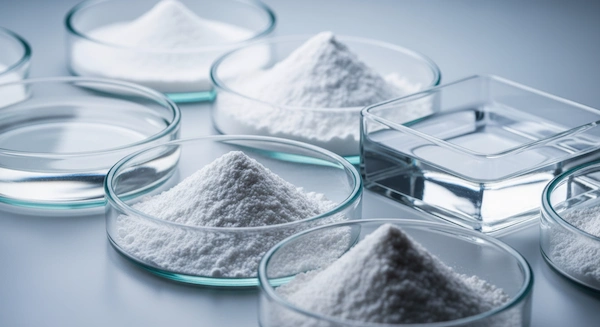
For epoxy modification, S-LEC™ BK Series offers a PVB-based approach. This supports flexible material design. When selecting a modifier, compare performance with unmodified epoxies, rubber-modified systems, and silicone-based materials. Consider adhesion, toughness, compatibility with solvents and resins, and formulation flexibility. S-LEC™ BK Series does not provide full elastomeric behavior, unlike rubber modifiers. Its micro-phase structure helps tune material properties within the cured system. This lets formulators balance hardness and crack resistance without compromising other properties.
The optimal grade depends on the epoxy system, solvent composition, curing conditions, and target performance. SEKISUI Specialty Chemicals supports grade selection and sample evaluation based on your formulation needs.

A typical use case involves bonding different components made from metals, plastics, or glass. Reliability after thermal cycling is critical. Conventional, unmodified epoxy systems achieve initial adhesion and hardness. However, stress concentrations from thermal-expansion mismatches can cause cracking or interfacial delamination over time.
Incorporating S-LEC™ BK Series into epoxy formulations makes it easier to adjust toughness and stress relaxation in the cured system. This improves the balance between adhesion and durability. For applications with interfacial failure after thermal shock testing, formulators can explore compositions that suppress cracks and maintain adhesion. Final suitability should be confirmed through evaluation under actual conditions, including substrate type, formulation, and curing profile.
Q. What types of epoxy resins are compatible with S-LEC™ BK?
A. Compatibility depends on the epoxy type, solvent system, and formulation conditions. By sharing your current epoxy system and formulation details, we can recommend suitable grades and evaluation approaches. Compatibility data is also available in the product catalog.
Q. In what form is S-LEC™ BK Series supplied?
A. S-LEC™ BK Series is supplied as a powder, while some solution grades are available. Handling characteristics may vary depending on solvent choice, resin system, and dispersion conditions, so evaluation under actual processing conditions is recommended.
Q. Can I use S-LEC™ BK Series with other additives or resins?
A. Feasibility depends on the resins, curing agents, solvents, and additives. Confirm compatibility, curing, viscosity, and final properties through formulation testing to ensure performance and reduce risk.
Q. What benefits can I expect when I use S-LEC™ BK?
A. Typical benefits include improved toughness, adjusted stress relaxation, better balance with adhesion, and enhanced impact resistance. Performance may vary depending on formulation and evaluation conditions.
Q. What information should I provide for sample request?
A. Please share details such as epoxy type, curing agent, solvent, formulation ratio, curing conditions, substrate, and target properties. This helps us propose suitable grades and evaluation conditions.