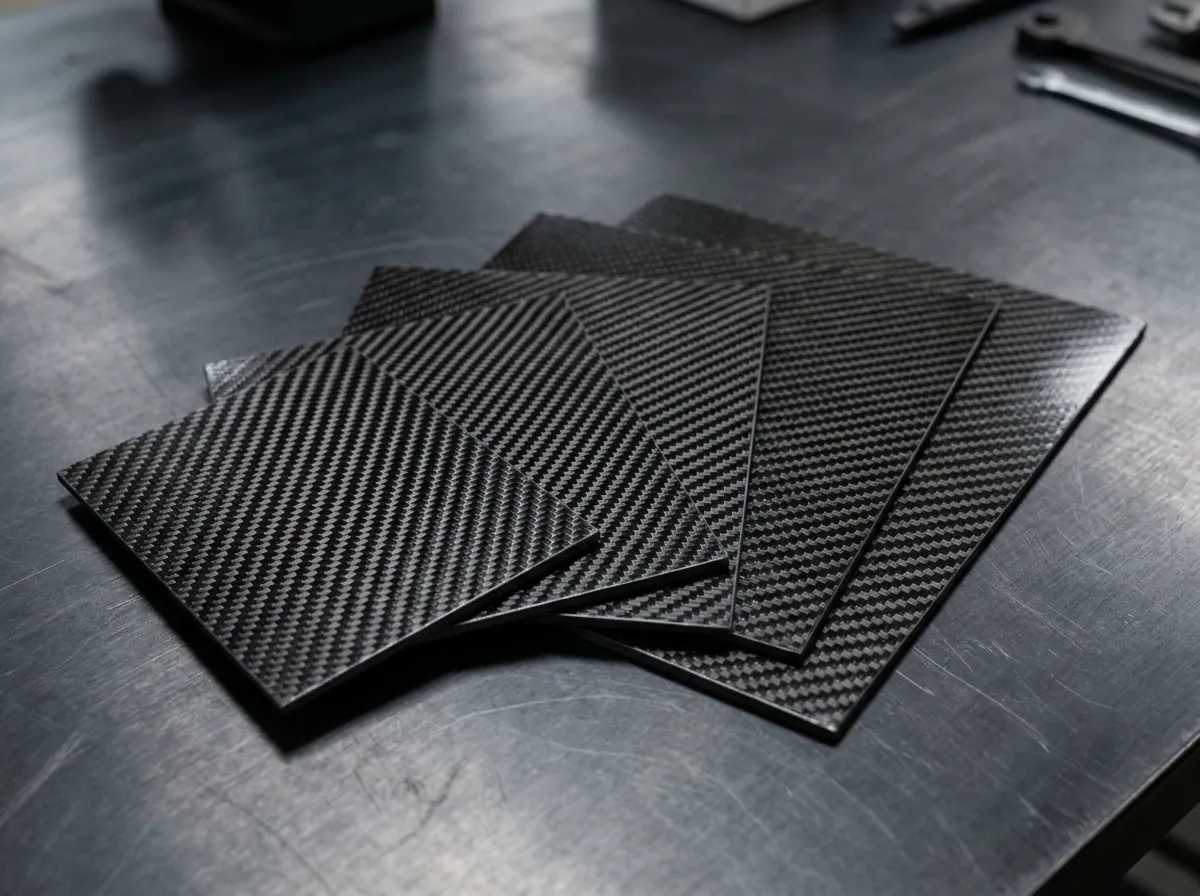
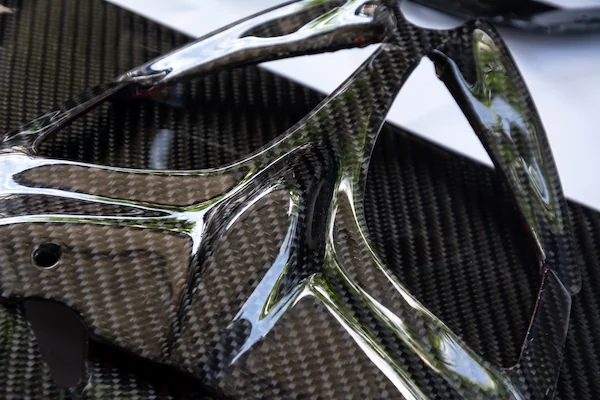
Carbon fiber-reinforced plastics (CFRP) are widely used in aerospace, automotive, and industrial applications for their lightweight, high-strength properties. However, matrix resin design can significantly influence both performance and process stability. Challenges such as interlaminar delamination, crack propagation under impact, and variations in tack, viscosity, and storage stability may arise during prepreg processing. These factors can lead to inconsistencies in molding quality and yield.
S‑LEC™ BK Series from SEKISUI Specialty Chemicals is designed to modify epoxy matrix resins for CFRP applications by leveraging the inherent flexibility and polarity of PVB. This approach directly supports toughness, interfacial adhesion, and processability, helping improve mechanical performance and process consistency in CFRP.
CFRP performance depends not only on carbon fibers but also heavily on the design of matrix resins and processing conditions. At the CFRP resin formulation stage, compatibility with resins or additives and appropriate viscosity control are essential. During prepreg processing, impregnation behavior, viscosity stability, and storage stability directly affect material quality.
In the layup and molding stages, tack and drapeability influence handling and forming accuracy in CFRP. For the final composite, properties such as interlaminar fracture toughness, impact resistance, and interfacial adhesion are critical.
Because these properties interact with each other, optimizing a single parameter is not sufficient. A balanced approach across the entire CFRP process is essential for achieving stable performance and consistent quality.

SEKISUI Specialty Chemicals proposes a modification approach using PVB or polyvinyl acetoacetal resins to address key challenges in CFRP matrix resins. S‑LEC™ BK Series contains polar functional groups that can interact with both epoxy resins and carbon fiber surfaces in CFRP. This interaction may improve interfacial adhesion and help suppress delamination and crack propagation.
As a result, improved impact resistance and interlaminar fracture toughness can be considered for CFRP applications. In addition, variations in molecular design allow adjustment of viscosity and tack properties, enabling more flexible control of processing behavior.
By leveraging these characteristics, PVB offers a practical option for balancing mechanical performance with processability in CFRP design.

When selecting PVB for CFRP applications, it is important to evaluate multiple factors, including compatibility with epoxy systems, viscosity during formulation, prepreg tack, storage stability, and final mechanical properties. Focusing only on toughness improvement may overlook critical CFRP process requirements.
S‑LEC™ BK Series offers multiple grades with different molecular weights and functional group designs, allowing selection based on specific CFRP applications and processing conditions. For example, designs prioritizing impact resistance and interlaminar toughness may differ from those optimized for impregnation and handling performance.
SEKISUI Specialty Chemicals supports customers through grade recommendations, sample supply, and evaluation aligned with existing CFRP formulations and processing conditions.

In CFRP components for aerospace, automotive, and industrial applications, both lightweight design and high strength are required, along with resistance to crack propagation and interlaminar delamination under impact. Conventional epoxy-based matrix systems may face challenges, as improvements in toughness can increase viscosity and reduce processability.
In such cases, incorporating PVB as a modifier provides a potential approach to balance these requirements in CFRP. It enables the adjustment of interfacial adhesion, interlaminar fracture toughness, and impact resistance while maintaining tack and processing characteristics.
Careful evaluation based on specific CFRP applications and molding processes is essential to determine suitability and optimize overall material design.
Q. What role does S-LEC™ BK Series play in CFRP applications?
A. S-LEC™ BK Series can be used as a modifier for epoxy matrix resins, allowing adjustment of properties such as toughness, interfacial adhesion, viscosity, and tack. It may also help improve process stability and mechanical performance.
Q. Which CFRP molding processes can S-LEC™ BK Series be applied to?
A. S-LEC™ BK Series can be evaluated for use in prepreg, autoclave, RTM, filament winding, and press molding, depending on application and process conditions.
Q. What benefits can I expect by adding PVB?
A. Potential contributions include improved interlaminar fracture toughness, impact resistance, interfacial adhesion, crack suppression, and control of viscosity and tack in CFRP. It may also support more consistent processing.
Q. Can I use it with epoxy resins and existing formulations?
A. Compatibility depends on resin systems, curing agents, solvents, loading levels, and process conditions, so evaluation with selected grades is recommended for CFRP use. It may also require confirmation under actual use conditions.
Q. How should I select the appropriate grade?
A. Grades should be chosen based on target properties, molding processes, viscosity range, tack, storage stability, and compatibility with existing CFRP formulations. It may also be useful to compare grades through evaluation.
Q. Is technical support available?
A. Yes. SEKISUI Specialty Chemicals supports grade selection, sample supply, and evaluation based on your CFRP application, process, and performance requirements. Please contact us for support.