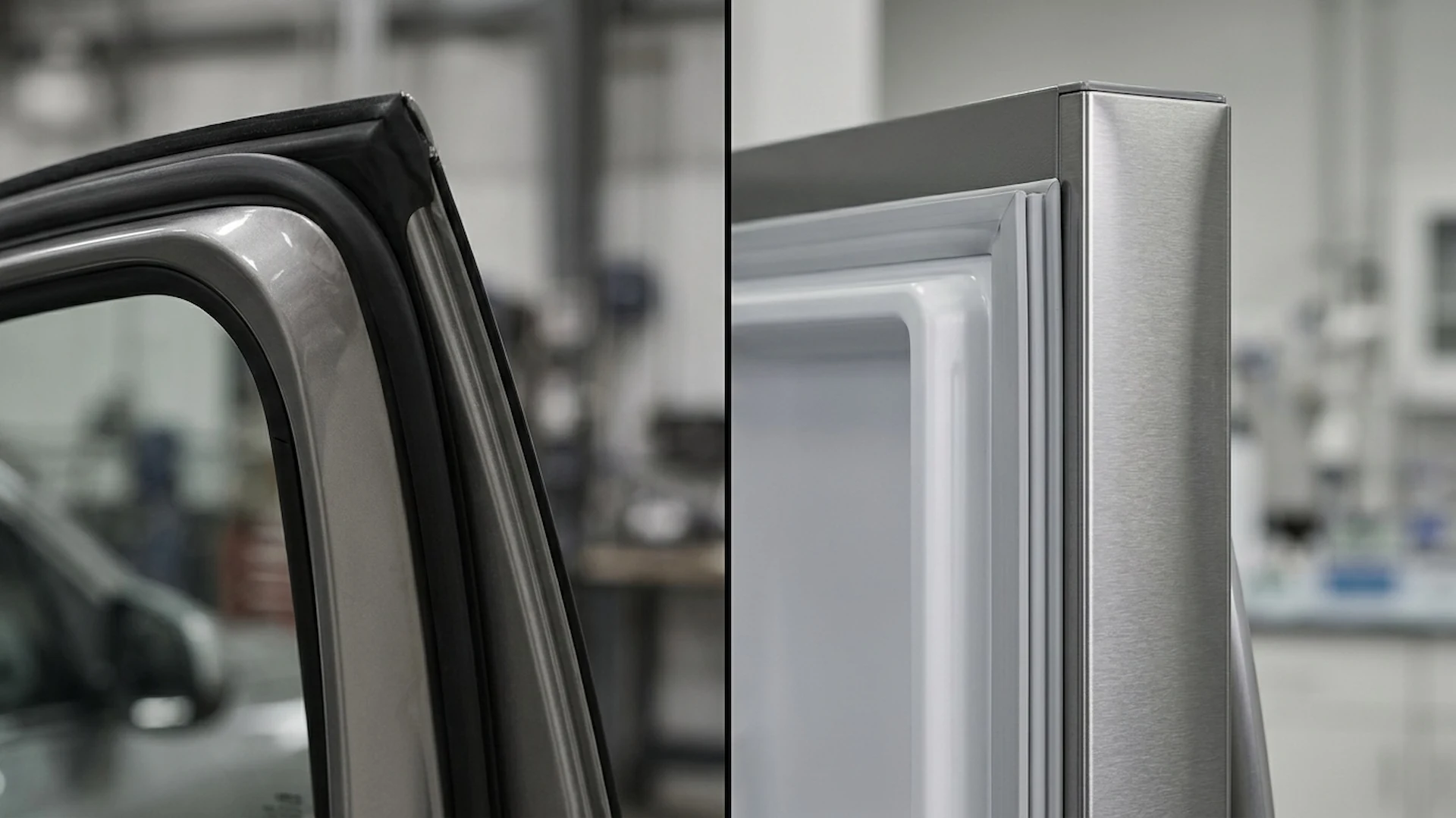
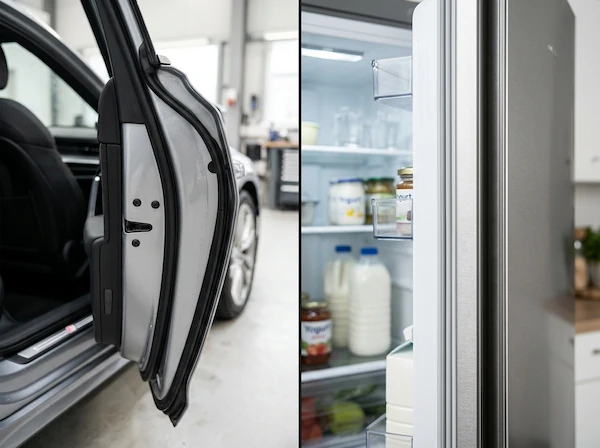
Sealing materials used in vehicles and refrigerators close gaps around openings and joints, supporting airtightness, water resistance, noise control, and thermal insulation.
Automotive glass run channels, weatherstrips, and door seals help limit the entry of water, dust, and noise while supporting smooth window movement and comfortable door operation. Refrigerator door seals reduce cold-air leakage and outside-air intrusion.
ADVANCELL™ thermally expandable microspheres facilitate the formation of fine, closed cells in materials such as PVC, TPV/TPS, and EPDM. We support foam designs that balance weight reduction, insulation, surface appearance, and processing stability for each sealing application.

Seal design must address long-term recovery, compression sealing, surface quality, sliding performance, heat and weather resistance, low-temperature flexibility, and processing stability.
Automotive applications also require water, dust, and noise control around doors and windows, together with improved NVH performance. Refrigerator door seals must remain flexible and recover after repeated opening and closing while limiting heat transfer. Increasing the expansion ratio generally reduces density, but it can also increase the risk of lower stiffness, rough surfaces, dimensional variation, and uneven foaming.
Effective foam design must therefore consider appearance and production stability alongside weight reduction and insulation.
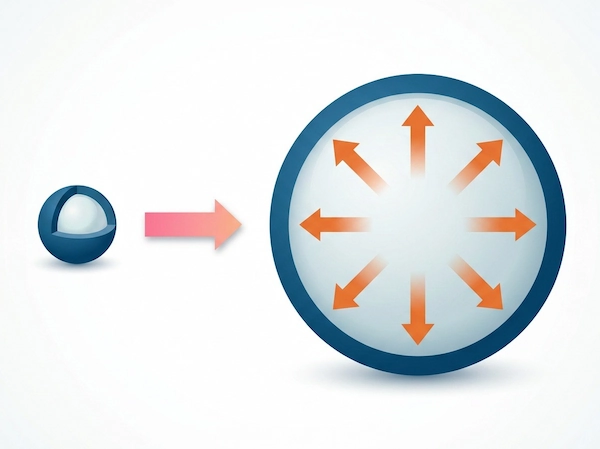
ADVANCELL™ consists of thermally expandable microspheres that expand when heated and facilitate the formation of fine, closed cells within the base material. Unlike chemical blowing agents, which generate gas through a chemical reaction, ADVANCELL™ uses the particles’ own expansion. This makes it easier to investigate foam designs with careful control of cell structure and surface appearance.
Select grades for TPV/TPS, EPDM, and PVC based on target density, mechanical properties, processing temperature, and appearance requirements. Actual performance depends on the formulation, addition level, dispersion, processing conditions, and profile design. We therefore recommend evaluating samples under application-specific conditions.
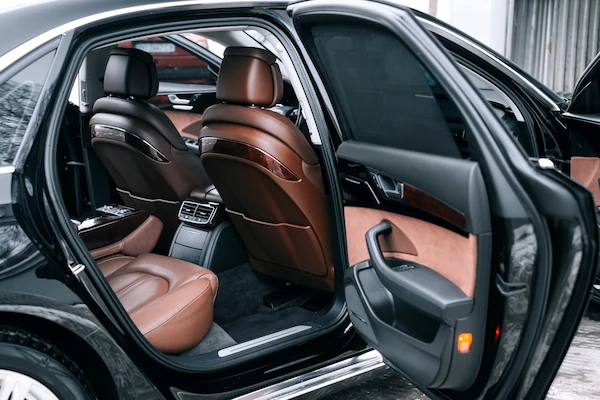
Automotive glass run channels, weatherstrips, and door seals must provide sealing performance while supporting smooth window movement, comfortable door operation, NVH improvement, and long-term recovery. Demand for lower-density seals is also increasing as vehicle manufacturers pursue weight reduction.
In evaluations of TPE door seals and TPV glass runs, ADVANCELL™ enabled density reduction while helping control foaming variation, with reported weight reductions of 10–50% depending on application conditions. An EPDM weatherstrip evaluation also reported a 20% yield improvement through more stable foaming. Results vary with the material, profile design, addition level, processing temperature, and continuous vulcanization conditions, making application-specific evaluation essential.
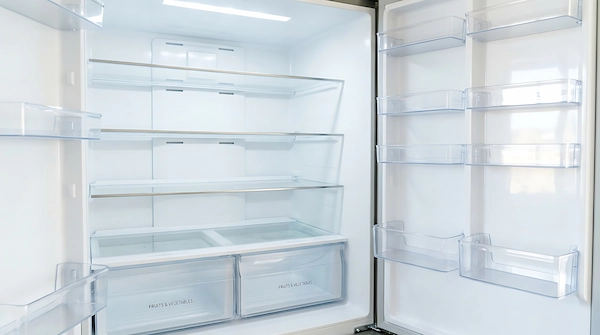
Refrigerator door seals help limit cold-air leakage and outside-air intrusion, contributing to stable internal temperatures and energy performance. Introducing a foamed structure reduces thermal conductivity, but insulation must be balanced with surface quality, flexibility, recovery, mechanical properties, and extrusion stability.
In evaluations of PVC refrigerator door seals containing ADVANCELL™, foamed samples showed lower thermal conductivity than solid PVC seals. Some evaluation conditions also indicated the potential to improve refrigerator energy performance while maintaining tensile strength at a level comparable to the current material. Results depend on the PVC formulation, profile geometry, expansion ratio, processing and cooling conditions, and evaluation method.

Selecting an ADVANCELL™ grade requires consideration of the seal component, base material, processing temperature, continuous vulcanization conditions, target density, surface appearance, mechanical properties, and dispersion. P701T1 is a candidate for TPV/TPS automotive seals where weight reduction and appearance must be balanced. For EPDM weatherstrips, choose either EML101 or EM306 depending on the vulcanization temperature and target density. PVC refrigerator seals require a grade whose expansion onset and maximum expansion temperatures match the extrusion process. Share your material, temperature range, target expansion ratio, profile geometry, appearance requirements, and required properties so we can recommend suitable grades and evaluation conditions.
| Application | Base Material | Example Components | Candidate Grade | Key Evaluation Items |
|---|---|---|---|---|
| Automotive seals | TPV/TPS | Glass run channels, door seals | P701T1 | Target density, appearance, sliding performance, processing temperature |
| Automotive seals | EPDM | Weatherstrips | EML101 / EM306 | Vulcanization conditions, recovery, dimensional stability |
| Refrigerator seals | PVC | Door seals | Grade matched to processing temperature | Insulation, flexibility, appearance, thermal conductivity |
Q. What types of automotive seals can use ADVANCELL™?
A. ADVANCELL™ can be evaluated for extruded or continuously vulcanized components such as glass run channels, weatherstrips, and door seals. Applicability depends on the base material (TPV/TPS or EPDM), processing temperature, vulcanization conditions, target density, appearance requirements, and required mechanical properties.
Q. What benefits can ADVANCELL™ provide in refrigerator seals?
A. Adding a foamed structure to PVC door seals reduces thermal conductivity and can improve insulation. Evaluations have shown lower thermal conductivity than that of solid PVC seals, with potential benefits for refrigerator energy performance under certain conditions. Actual results depend on the formulation, profile geometry, processing conditions, and evaluation method.
Q. How does ADVANCELL™ differ from chemical blowing agents?
A. Chemical blowing agents produce gas through a reaction, while ADVANCELL™ particles expand when heated and form fine, closed cells. This mechanism provides another option for applications where cell structure, foaming uniformity, and surface appearance are important design considerations.
Q. Which ADVANCELL™ grade should I select?
A. P701T1 is a candidate for TPV/TPS automotive seals. EML101 or EM306 may be considered for EPDM weatherstrips, depending on the vulcanization temperature and target density. For PVC refrigerator seals, match the grade’s expansion temperature range to the extrusion conditions.
Q. Can ADVANCELL™ be evaluated using existing equipment?
A. Evaluation using existing extrusion or continuous vulcanization equipment may be possible. Applicability depends on the base material, extrusion temperature, vulcanization conditions, screw configuration, residence time, shear conditions, target expansion ratio, and product profile. Review current processing conditions before selecting the grade and addition level.
Q. What information is needed for sample evaluation?
A. Please provide the application, target component, base material, processing method and temperature, vulcanization conditions, product profile, current blowing agent, target density and expansion ratio, appearance requirements, required mechanical properties, and the issue you would like to address. This information will help select the grade and evaluation conditions.