
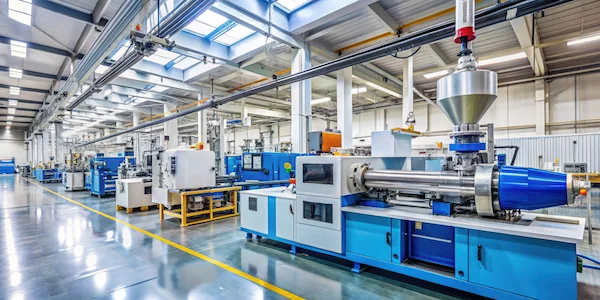
ADVANCELL™ from SEKISUI Specialty Chemicals is a thermally expandable microsphere that helps manufacturers significantly reduce product weight without compromising quality. When integrated into polymer matrices, ADVANCELL™ delivers increased thermal insulation for energy savings, improved sound absorption for quieter environments, and enhanced cushioning for greater comfort, creating high-performance products with a fine, closed-cell structure.
ADVANCELL™ is compatible with polymers such as PVC, PP, PE, TPV, EPDM, and composites, and suits extrusion, injection molding, blow molding, casting, coating, and calendering processes.
For applications requiring both lightweighting and stable performance—such as building materials, automotive components, and industrial products—ADVANCELL™ offers flexible design options that balance expansion behavior, appearance, and mechanical properties.
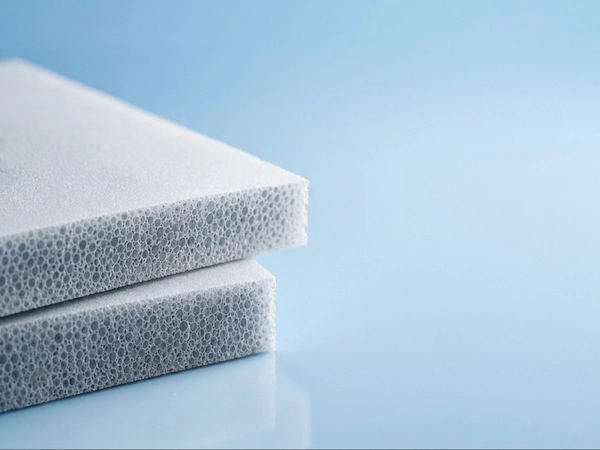
In foam molding, manufacturers must do more than reduce weight. They must achieve uniform cell structure, maintain consistent surface appearance, ensure dimensional stability, and deliver reliable mechanical properties, while maintaining process reproducibility. These requirements become especially critical in building materials, automotive parts, and industrial applications, where additional functions such as insulation, sound absorption, and handling performance are expected.
Conventional chemical foaming agents generate gas during thermal decomposition, so processing conditions strongly influence their behavior. Consequently, manufacturers may encounter voids, surface defects, uneven foaming, and property degradation. Changing resin type or molding method further complicates the control of foaming conditions.
ADVANCELL™ forms fine, uniform closed cells, boosting weight reduction, enhancing surface consistency, and improving overall process reliability.
Increasing the expansion ratio achieves lightweighting but can lead to surface roughness, voids, reduced strength, and dimensional variation—especially in mass production.
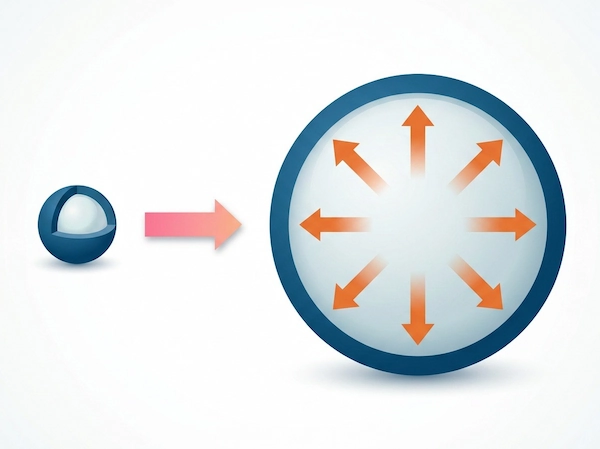
Building on this, ADVANCELL™ differs from conventional chemical foaming agents because its microspheres expand directly upon heating instead of relying on gas generation. This method gives manufacturers greater control over foaming timing and cell structure, enabling them to form fine, uniform closed cells within the resin. Manufacturers can improve weight reduction while maintaining a balance of surface quality, mechanical properties, and process reproducibility.
Furthermore, by selecting appropriate grades based on expansion temperature and particle size, manufacturers achieve more stable foaming even in applications that previously faced challenges, such as uneven foaming or surface defects.
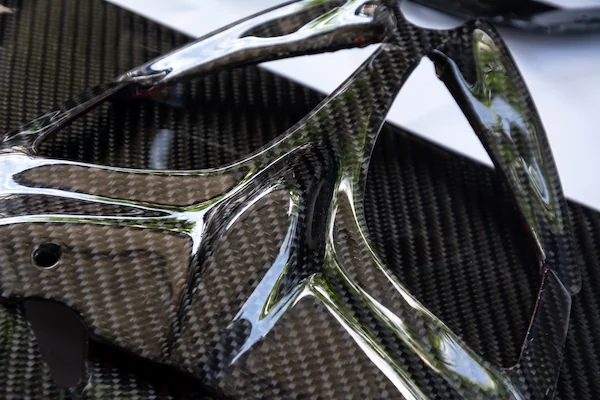
Epoxy resins are widely used in adhesives, encapsulation, coatings, and composite materials, where high adhesion, heat resistance, mechanical strength, and dimensional stability are required. They are also commonly used in reinforced composites such as CFRP, where lightweight and strength must be balanced.
However, depending on the application, challenges such as high density, overall weight, stress concentration, and limited thermal insulation or cushioning properties may arise.
To address these challenges, ADVANCELL™ is incorporated into epoxy systems to reduce density and provide insulation and cushioning functions by introducing microspheres. These microspheres expand within epoxy processing conditions, which are influenced by curing temperature, viscosity, mixing conditions, shrinkage, and exothermic reactions; confirming the compatibility of these factors with microsphere expansion is important when evaluating formulations.
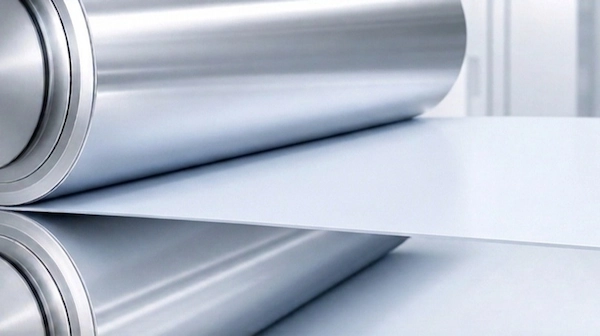
Calendering sheet and film products demand precise thickness, smooth appearance, stable roll processing, and strong processability. For PVC, elastomer, and industrial materials, achieving lightweighting cannot compromise appearance or dimensional stability.
ADVANCELL™ provides key benefits by enabling fine closed-cell structures, which lower density and impart added value such as improved flexibility, enhanced insulation, and superior cushioning through effective microsphere dispersion and controlled expansion. These advantages help manufacturers fulfill lightweighting and performance requirements for sheet and film products.
For optimal results, synchronize roll temperature, shear, and residence time with the compound’s expansion profile. Ensure foaming occurs precisely when needed.

To select the appropriate ADVANCELL™ grade, first thoroughly assess the resin system, molding process, processing temperature, shear conditions, residence time, and target expansion level. This evaluation guides the choice, as different materials—including PVC, polyolefins, elastomers, and epoxies—have unique processing windows and rheological characteristics influencing cell formation and final properties.
Processing conditions differ between extrusion, injection molding, blow molding, coating, and calendering. Formulations must prevent premature expansion and allow controlled foaming at the desired stage.
For thermosets like epoxy, also consider curing temperature, viscosity, and reaction heat. By sharing application needs, appropriate evaluation grades can be suggested.
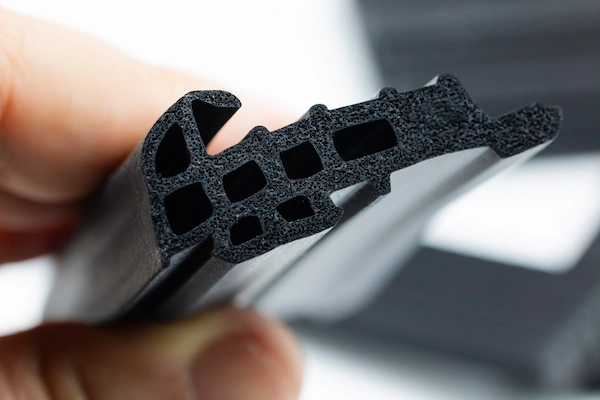
ADVANCELL™ is suitable for applications that require both lightweighting and stable product performance across a range of industries.
Specifically, in building materials, it can be applied to PVC sheets, flooring, insulation materials, and sealing components. This application reduces material usage, makes handling easier, and improves insulation, all while keeping the original appearance quality.
In automotive applications, it contributes to weight reduction and improved handling in interior components, seal materials, and cushioning parts, supporting improved fuel or energy efficiency.
For industrial materials such as tubes, gaskets, sheets, and coatings, ADVANCELL™ enables additional functionalities, including sound insulation, thermal insulation, flexibility, and process stability.
Q. Which resins can I use ADVANCELL™ with?
A. ADVANCELL™ is suitable for PVC, PP, and PE, as well as elastomers such as TPV and EPDM, and various composites. However, since suitability also depends on processing temperature, viscosity, and required foam structure, it’s best to confirm compatibility before evaluating.
Q. How does ADVANCELL™ differ from chemical foaming agents?
A. In contrast to chemical foaming agents that generate gas, ADVANCELL™ microspheres expand directly when heated. This direct expansion allows for better control of cell structure, reducing voids and surface defects.
Q. Can I use ADVANCELL™ in calendering processes?
A. Yes, ADVANCELL™ can be used in calendering. To achieve controlled foaming at the desired stage, ensure the resin type, roll temperature, shear, and expansion characteristics are properly aligned.
Q. Can I apply ADVANCELL™ in epoxy resin systems?
A. While ADVANCELL™ can be used in epoxy systems, evaluation is necessary. The curing temperature, viscosity, and reaction heat all impact foaming behavior, so confirm compatibility before proceeding.
Q. What should I consider when using ADVANCELL™?
A. When using ADVANCELL™, avoid mixing during resin drying. Monitor for excessive heat or shear, as these may affect expansion performance, and carefully control processing conditions.
Q. How can I select the most suitable ADVANCELL™ grade?
A. The optimal grade depends on resin type, process, temperature, and required properties. Sharing application details helps identify suitable evaluation candidates.