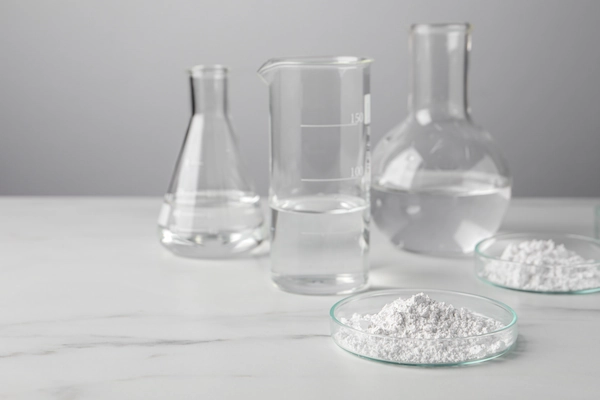
In material development, selecting materials that fit manufacturing and end-use conditions is essential. SEKISUI Specialty Chemicals can support customers even before a product name or grade has been selected. By reviewing the application, substrate, processing method, required properties, current material issues, and evaluation conditions, we help organize possible material candidates and next steps.
Depending on the development stage, we can also support sample evaluation, formulation studies, processing condition reviews, and preparation for future scale-up discussions.
SEKISUI Specialty Chemicals offers technology proposals that go beyond intrinsic material properties. We design resin structures, functional groups, material forms, and particle structures for various applications and processing conditions. Our technologies support water-based formulation design, dispersion adjustment, adhesion, printability, process design with thermal decomposition and removability, and particle design for weight reduction or insulation.
We also optimize practical handling during coating, kneading, molding, firing, removal, and mass production. This helps customers connect material design to evaluation and application development.
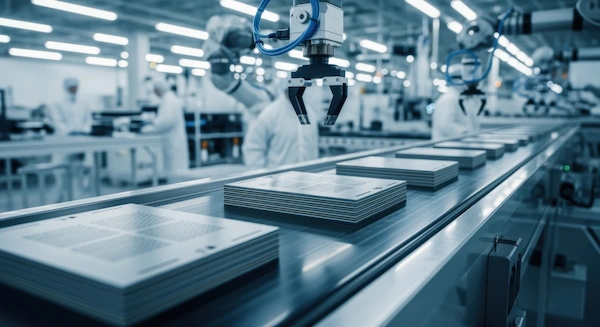
In pastes, slurries, coatings, and binders, product quality depends on more than basic material properties—compatibility, dispersion, viscosity, and coating performance also matter. SEKISUI Specialty Chemicals improves dispersion, adhesion, printability, and processability by adding functional groups to PVA/PVOH and PVB. For example, PVB-based binders for pastes must provide easy screen release, stable printing, and shape retention after drying. We design materials based on application and evaluation needs to achieve reliable, consistent results.
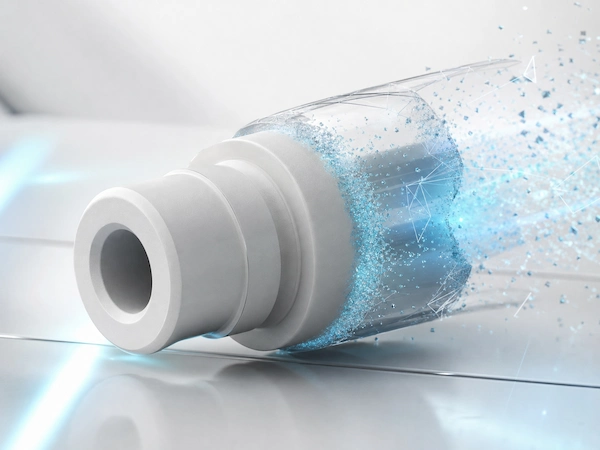
In ceramic making, materials must function during processing and be removed properly for firing, lost-core molding, temporary holding, and easy-release. SEKISUI Specialty Chemicals recommends options—PVA/PVOH, PVB, and acrylic resins—for thermal breakdown, water removal, and fewer residues. Degreasing and removal depend on chemical composition, temperature, heating steps, air type, part size, and interactions with other parts. Pelletizing materials reduces dust, improves feeding and handling, and ensures steady production.

Switching to water-based materials helps reduce solvent use and improve consideration for the working environment. However, when moving from solvent-based to water-based systems, it is important to confirm the balance of adhesion, dispersion stability, coating behavior, dried film properties, and substrate adhesion.
In addition to PVA/PVOH, SEKISUI Specialty Chemicals applies technology that provides water solubility to polyvinyl acetal resin, which is typically difficult to dissolve in water. We support material design for water-based binders, coatings, and adhesives, from improving existing formulations to exploring new water-based approaches.

When developing lightweight or molded products, the material’s foaming structure is a critical design factor.
SEKISUI Specialty Chemicals advances functional design by using particle technologies such as core-shell structures, hollow particles, and expandable microspheres. These materials help assess weight reduction, insulation, cushioning, and stress relaxation when incorporated into existing substrates. It is vital to confirm weight reduction along with expansion ratio, particle size, processing temperature, dispersion, appearance, dimensional stability, and mechanical performance. We support condition studies from initial evaluation onward.

You can consult with SEKISUI Specialty Chemicals even when the material name or grade has not yet been decided. We can start from your technical challenge or development theme, such as optimizing formulation methods, improving dispersion, enhancing processability, reducing residue, improving removability, minimizing weight, or reviewing foam molding conditions. Contact us to discuss your specific needs and begin finding solutions.
Please share your application, substrate, processing method, required properties, current issues, and evaluation conditions with us so we can help organize material candidates and possible evaluation steps.
Material development challenges are not always easy to organize by technology, material, or application alone. For example, even when the same binder material is used, properties such as dispersion, adhesion, thermal decomposition, and processability can differ significantly between MLCCs, ceramic-forming substrates, and heat-dissipation substrates, each with specific performance requirements and contexts. Similarly, a weight reduction project requires different particle designs and evaluation conditions depending on whether the target is epoxy material, sheet molding, or extrusion molding.
By starting from the entry point closest to your development theme—for instance, the specific substrate or molding technique—you can more easily identify relevant material candidates and evaluation approaches.
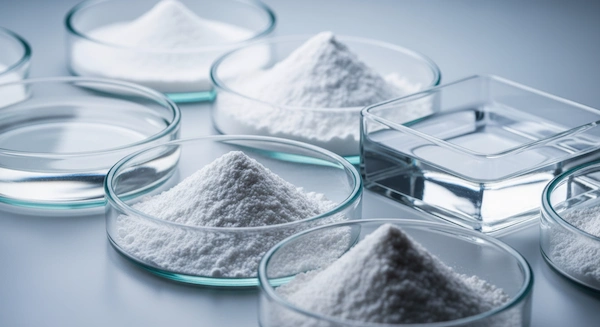
When selecting functional materials, please consider the resin, substrate, formulation components, processing methods, and conditions such as drying, firing, or foaming.
SEKISUI Specialty Chemicals delivers material technologies for ceramic processing, electronic components, coatings, inks, adhesives, dispersions, foam molding, and weight reduction. With expertise in polyvinyl butyral resin, polyvinyl acetoacetal resin, specialty acrylic binders, PVA/PVOH, and thermally expandable microspheres, we help you evaluate candidates by key points: adhesion, film formation, dispersion stability, process stability, and functional design.
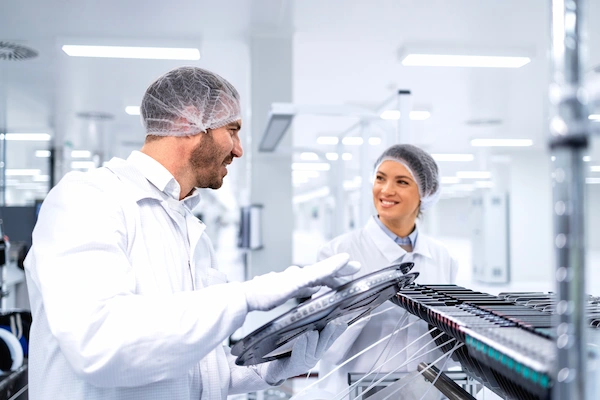
Material selection often begins with identifying the issue or process to improve, rather than starting from the name or type of resin. Examples include reducing solvent use, optimizing foaming, lowering molded part weight, suppressing dust or scattering, or adjusting toughness and adhesion in thermosetting resins. The most suitable material and evaluation criteria depend on the specific challenge at hand.
SEKISUI Specialty Chemicals introduces polyvinyl acetal resin, specialty acrylic resin, expandable microspheres, and related technologies as practical starting points for resolving technical challenges.

SEKISUI Specialty Chemicals provides advanced materials for diverse industrial applications, including electronics, ceramics, thermal management, CASE applications, composites, magnets, foam molding, and hollow or flow-channel molding. By integrating technologies like binders, resin modifiers, expandable microspheres, and water-soluble compounds, we enable material development focused on formability, dispersion, adhesion, weight reduction, solvent minimization, and process stability. For each application area, access essential properties, processing details, material options, and links to additional information.