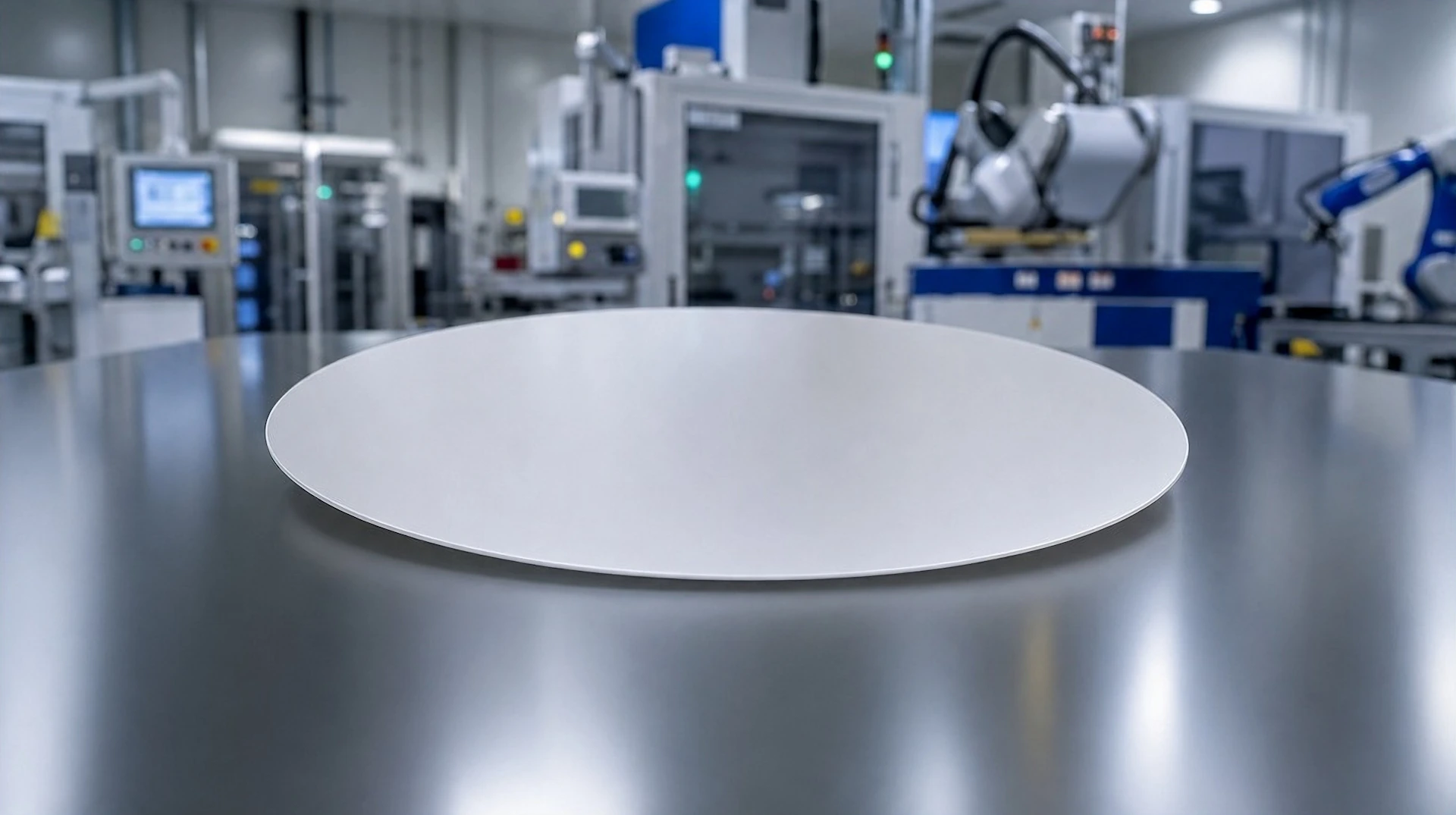

Support and carrier wafers hold semiconductor wafers or chiplets during thinning, redistribution, molding, and handling. Consistently forming large, thin ceramic substrates requires careful control of stiffness, flatness, dimensional stability, powder dispersion, slurry viscosity, green sheet strength and flexibility, lamination, machinability, and debinding behavior.
Based on your ceramic powder, formulation, forming method, process conditions, and required properties, SEKISUI Specialty Chemicals recommends candidate grades from S-LEC™ B Series of PVB-based binders for ceramic forming.

Large, thin ceramic substrates require sufficient stiffness for processing and handling, plus uniform thickness, flatness, and dimensional stability. During manufacturing, powder agglomeration or sedimentation, changes in slurry viscosity, and variations in coating or drying can cause uneven thickness or warpage. Inadequate green sheet strength, flexibility, interlayer adhesion, or gas release during debinding can also cause cracking, chipping, blistering, or delamination.
Because these issues are not determined solely by the binder, evaluate the entire process, including powder preparation, formulation, forming, drying, lamination, machining, debinding, and firing.

Binder suitability depends on more than the binder itself. Ceramic type, particle size, and surface condition; solvent, dispersant, and plasticizer; and solids content all influence performance. Slurry evaluation typically considers solvent solubility, target viscosity, powder agglomeration, sedimentation, and viscosity changes during storage. Sheet-forming assessments include coatability, thickness uniformity, and the strength, flexibility, and handling of the dried green sheet. Review lamination temperature and pressure, interlayer adhesion, machining behavior, formed-part thickness, and debinding conditions as well.
SEKISUI Specialty Chemicals recommends candidate S-LEC™ B Series grades based on the conditions and challenges you share.
S-LEC™ B Series includes PVB-based binders for ceramic sheet forming and lamination. Available grades differ in molecular weight, solution viscosity, glass-transition temperature, functional-group composition, and solvent solubility.
These options let you compare grades according to required slurry viscosity and flow behavior, as well as green sheet strength, flexibility, handling, machinability, and lamination performance. Actual forming behavior also depends on the powder, solvent, dispersant, plasticizer, addition level, and drying, lamination, and debinding conditions. Evaluate candidate grades using the intended formulation and process.
A binder for ceramic support wafers cannot be selected from a single property, such as molecular weight or solution viscosity. For example, increasing slurry viscosity or green sheet strength may affect coatability, deaeration, flexibility, or lamination performance. Behavior may also change depending on the type and amount of plasticizer, drying conditions, and lamination temperature and pressure.
SEKISUI Specialty Chemicals reviews the application, ceramic powder, solvent, formulation, forming method, equipment conditions, required properties, and current defects. Based on this information, we recommend suitable candidate grades from S-LEC™ B Series for further evaluation.

Large, thin ceramic sheets may experience thickness variation, warpage after drying, breakage during handling, or interlayer delamination. When reviewing these issues, consider the ceramic type, particle size, and surface condition; the solvent, dispersant, and plasticizer; the solids content; the binder level; and the sheet thickness. Slurry preparation and storage, coating, drying, lamination, machining, debinding, and firing conditions are also important, particularly the stage at which the defect occurs.
Based on the available process information and required green sheet properties, SEKISUI Specialty Chemicals recommends S-LEC™ B Series grades for comparative evaluation under the intended formulation and process conditions.
Q. What ceramic forming processes can use S-LEC™ B Series?
A. S-LEC™ B Series can be considered as a PVB-based binder for ceramic sheet forming and lamination. Suitability depends on the ceramic material, powder characteristics, forming method, solvent, dispersant, and plasticizer. Evaluate candidate grades using the intended formulation and process.
Q. How is a suitable grade selected?
A. We review the ceramic material, powder characteristics, forming method, solvent, solids content, target slurry viscosity, sheet thickness, required strength and flexibility, lamination conditions, and debinding and firing conditions. Select grades based on the complete formulation and process rather than a single binder property.
Q. Can binder selection reduce cracking or delamination?
A. Binder properties influence green sheet strength, flexibility, and interlayer adhesion. However, cracking and delamination can result from multiple factors, including powder dispersion, additive levels, sheet thickness, drying, lamination, machining, and debinding conditions. Compare candidate grades using the intended formulation and process.
Q. What should be considered when designing debinding conditions?
A. Consider the binder type and amount, ceramic material, part thickness and geometry, debinding atmosphere, and available pathways for decomposition gases. Evaluate heating rate, holding temperature, and holding time progressively using the actual formed part, with reference to the binder’s thermal decomposition behavior.
Q. What information is needed for a binder consultation?
A. Share the application, ceramic material, particle size, forming method, current binder, solvent, dispersant, plasticizer, solids content, sheet thickness, processing conditions, and observed defects. If some conditions remain undecided, we can review the available information and identify the additional details needed for grade selection.
Q. Can I request samples or technical support?
A. After reviewing your ceramic material, formulation, forming process, required properties, and current challenges, we recommend candidate S-LEC™ B Series grades. Sample availability, quantity, and regional support conditions are provided individually. To close the consultation, confirm suitability using the intended formulation and production process.