In CASE applications, achieving the right balance of material performance across formulations and processing conditions is essential.
S-LEC™ functions as a versatile binder offering solvent solubility, adhesion to substrates, adsorption, and leveling properties, making it suitable for coating, dispersion, and surface treatment applications. ADVANCELL™ provides expansion upon heating, contributing to weight reduction, cushioning, and surface control in resins and elastomer systems. SELVOL™, a PVA/PVOH-based material, supports film formation, adhesion, and viscosity control. By selecting the appropriate product based on substrate, solvent, and process conditions, customers can optimize material design and manufacturing performance.

Material design in CASE applications requires alignment with both processing conditions and final product requirements.
Across coatings, adhesives, sealants, and elastomers, the same principle applies: select additives that match substrate, solvent, and process conditions while delivering the required performance.
In coatings, leveling, adhesion to substrates, dispersion stability, and film properties after drying are critical.
Adhesives must ensure reliable bonding between various substrates, including metals, glass, composites, and polymers, while also providing flexibility and stress relaxation.
Sealants require good filling performance, stable processing, uniform foaming, and smooth surface finish.
In elastomers, maintaining flexibility and elasticity while adding functions such as weight reduction, cushioning, insulation, and vibration damping is essential.
Selecting suitable additives is key to achieving these performance targets.
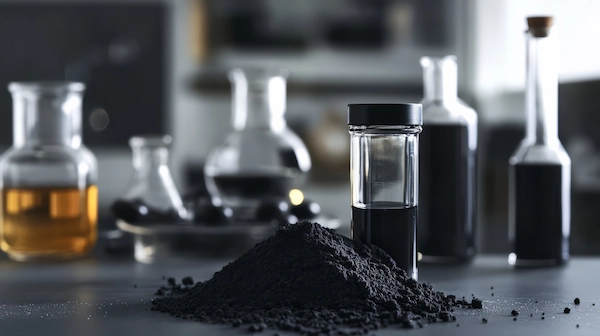
In applications such as lithium-ion battery electrodes and functional sheets, stable dispersion of CNTs, carbon black, metal powders, and other fillers is essential. In addition, shape retention after forming and adhesion between components play an important role in overall performance. SEKISUI Specialty Chemicals meets these requirements with a range of grades compatible with solvents of varying polarity, available in both liquid and solid forms. By leveraging its experience in electronic materials and functional components, SEKISUI Specialty Chemicals supports customers from initial material exploration through formulation and evaluation, helping align material design and manufacturing performance.
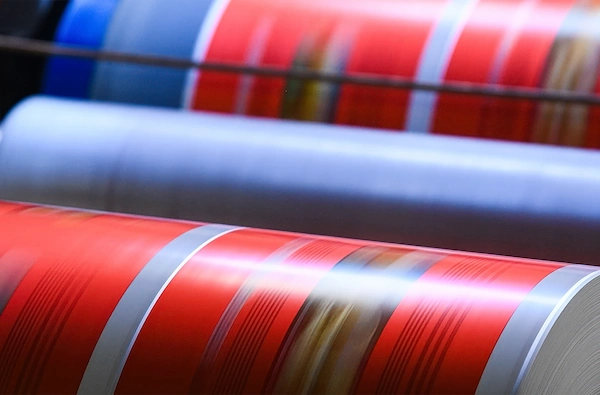
Coating applications—such as paints, inks, packaging printing, and sheet processing—require different performance characteristics depending on substrates and coating methods. During application, leveling and dispersion stability are essential, while after drying, adhesion and film properties become critical. S-LEC™ contributes to coating and dispersion system design through its solvent solubility, adhesion, adsorption, and leveling characteristics.
SELVOL™ supports coating formulations with its film-forming capability, adhesion, and viscosity control. SEKISUI Specialty Chemicals works closely with customers to support formulation development from the early stages, considering substrates, solvents, processing conditions, and required performance so the formulation matches the intended application.
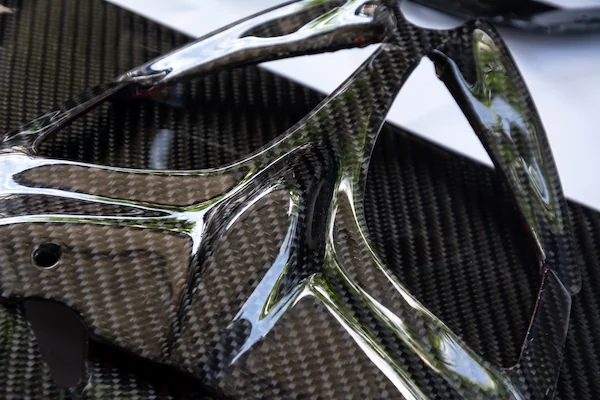
Adhesive applications require reliable bonding between different substrates, including metals, glass, inorganic materials, fiber-reinforced composites, and various polymers. In applications such as structural adhesives, FRP, and prepregs, not only adhesion but also flexibility after curing, stress relaxation, and compatibility with other resins are important design factors.
S-LEC™ BK Series, based on PVB, contains hydroxyl groups that contribute to adhesion to inorganic materials, including metals. When combined with thermosetting resins such as epoxy, phenolic, urethane, or acrylic systems, it can help balance flexibility and adhesion. SEKISUI Specialty Chemicals supports material selection based on substrate combinations, curing conditions, and performance requirements, keeping the focus on bonding performance.

Sealant formulations require a combination of adhesion, filling performance, and stable processing, along with a lightweight design and smooth surface finish after foaming. In applications such as automotive components, construction materials, gaskets, and sealing materials, reducing material usage while maintaining thickness and cushioning performance is essential.
ADVANCELL™ is a thermally expandable microsphere that contributes to weight reduction and material efficiency when incorporated into sealant formulations. Its controlled foaming behavior supports a uniform cell structure and improved surface smoothness across PVC, PE, PP, EPDM, and epoxy systems, helping maintain a balance between processing and final performance.
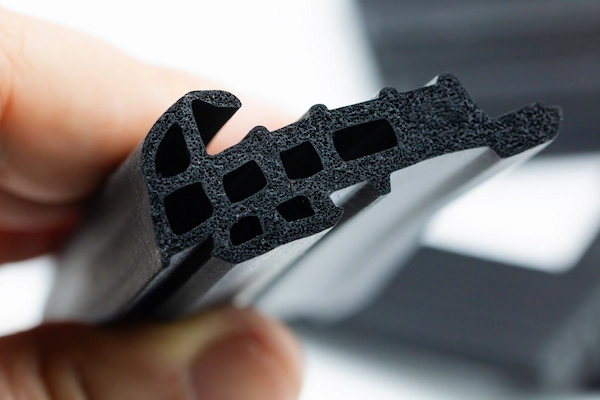
Elastomer applications require the addition of functionality while maintaining flexibility and elasticity. Products such as automotive interior components, gaskets, foamed tubes, and shoe soles demand lightweight design, cushioning, thermal insulation, sound control, and vibration damping.
ADVANCELL™ is a thermally expandable microsphere that enables weight reduction and material savings when compounded into elastomer systems. Utilizing controlled expansion during heating helps create lightweight structures without significantly affecting flexibility. It can be combined with various substrates, including PVC, PE, PP, EPDM, and other elastomers, depending on processing and performance requirements, to maintain the same balance of function and flexibility.
Q. What does “CASE” refer to?
A. CASE stands for Coatings, Adhesives, Sealants, and Elastomers. This page introduces SEKISUI Specialty Chemicals’ functional resins as additives, binders, and modifiers for these applications, with a focus on balancing material performance and processing conditions.
Q. How do I select the appropriate product for my application?
A. S-LEC™ is suitable for coatings and adhesives that require adhesion, dispersion, and leveling. ADVANCELL™ is used for lightweight design and cushioning in sealants and elastomers. SELVOL™ is suitable for water-based formulations that require film formation and viscosity control. Each product supports the same goal: matching material performance to application and process conditions.
Q. What applications is S-LEC™ suitable for?
A. It can be used in coating, hot-melt processing, powder surface coating, and dispersion applications, leveraging its solubility, adhesion, adsorption, and leveling properties.
Q. What value does ADVANCELL™ provide?
A. It supports weight reduction, material savings, cushioning, thermal insulation, sound damping, and vibration control through thermal expansion behavior.
Q. What information should I provide for sample evaluation?
A. Please share your application, substrate, solvent, formulation components, processing temperature, drying or curing conditions, target properties, and current challenges. For sealants and elastomers, foaming conditions and target density are also important.