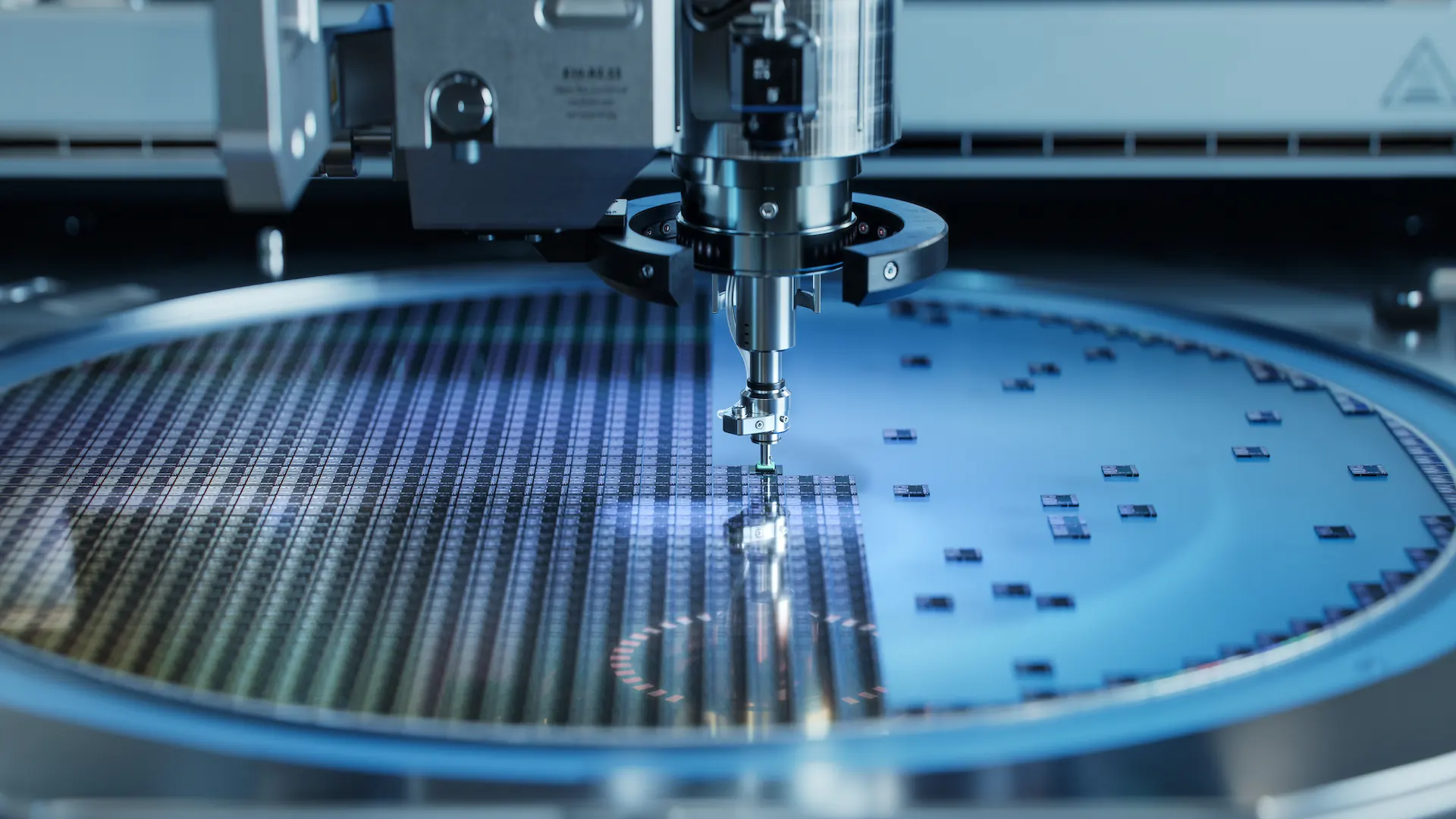

ADVANCELL™ from SEKISUI Specialty Chemicals helps design thermal release tapes by controlling adhesion during and after processing. These tapes must securely hold components through handling, transport, and assembly, while enabling clean removal after heating.
ADVANCELL™ uses expandable microspheres that expand upon heating, reducing adhesion within the adhesive layer. This helps maintain stable holding performance during processing and easier debonding at the desired stage, supporting more consistent tape performance in semiconductor wafer and electronic component manufacturing.

Designing thermal release tapes requires balancing three key factors: reliable holding during processing, clean debonding after heating, and stability across temperature conditions. During processing steps such as masking, transport, and assembly, strong adhesion is needed to prevent misalignment or detachment.
At the same time, debonding must minimize stress, adhesive residue, and surface damage. Increasing holding strength often leads to higher stress during removal, while prioritizing easy peeling may compromise fixation. In addition, unintended microexpansion due to thermal history can prematurely reduce adhesion. Careful material selection and temperature design are therefore essential to achieve consistent performance.

ADVANCELL™ enables a different approach to peel force control by introducing a physical change inside the adhesive layer. When heated, the microspheres expand and reduce adhesion from within, making it easier to design tapes that debond at a specific stage.
This approach complements conventional adhesive formulation, which alone may not fully achieve both strong holding and low-stress removal. By selecting particle size, expansion onset temperature, and expansion behavior to match your process conditions, you can suppress unintended adhesion loss while ensuring reliable debonding at the target temperature. To confirm suitability, evaluate it using your actual adhesive formulation and tape structure.

When selecting ADVANCELL™ for thermal release tape applications, review process temperatures and the thermal history during storage, handling, and transport. If expansion begins near process temperatures, unintended adhesion loss may occur, so consider a sufficient safety margin when choosing the grade.
You should also evaluate particle size, expansion onset temperature, expansion ratio, and dispersibility based on adhesive thickness, adhesive type, substrate material, and required debonding timing. Responsiveness at the target temperature is critical to achieve rapid adhesion reduction during the debonding step. To move forward, contact SEKISUI Specialty Chemicals to select a grade based on your specific process requirements.

The performance of ADVANCELL™ depends on multiple factors, including substrate type, adhesive formulation, tape structure, adhesive thickness, heating conditions, and required peel strength. For effective evaluation, it is important to design testing based on your actual process conditions.
By sharing key parameters such as processing temperature, target debonding temperature, heating time, and adhesive type, we can recommend suitable grades and evaluation approaches. To proceed, provide these details so we can validate holding performance, debonding behavior, and substrate impact together and guide the development of a tape design that meets your application requirements.
Q. How does ADVANCELL™ work in thermal release tapes?
A. ADVANCELL™ expands upon heating, reducing adhesion from within the adhesive layer. This helps maintain holding strength during processing and supports easier debonding at the desired temperature after processing.
Q. What are the benefits of using ADVANCELL™?
A. It enables peel force design that does not rely solely on adhesive strength. By using heat-triggered expansion, you can balance stable holding, clean debonding, and reduced stress on the substrate.
Q. Is there a risk of expansion during processing?
A. If the expansion onset temperature is too close to process temperatures, unintended micro-expansion may occur. Select a grade that leaves sufficient margin to minimize this risk.
Q. How should I select the expansion onset temperature?
A. Select it based on process temperatures, storage conditions, and desired debonding timing. Ensure stability during processing and a sufficient margin so expansion occurs only at the intended temperature.
Q. Why is particle size uniformity important?
A. Variations in particle size can lead to uneven expansion and inconsistent peel performance. Uniform particle size helps achieve stable and consistent debonding behavior across the tape.
Q. What information should I provide when requesting a sample?
A. Provide processing temperature, target debonding temperature, heating time, adhesive thickness, substrate material, adhesive type, required peel strength, and acceptable residue or surface impact.