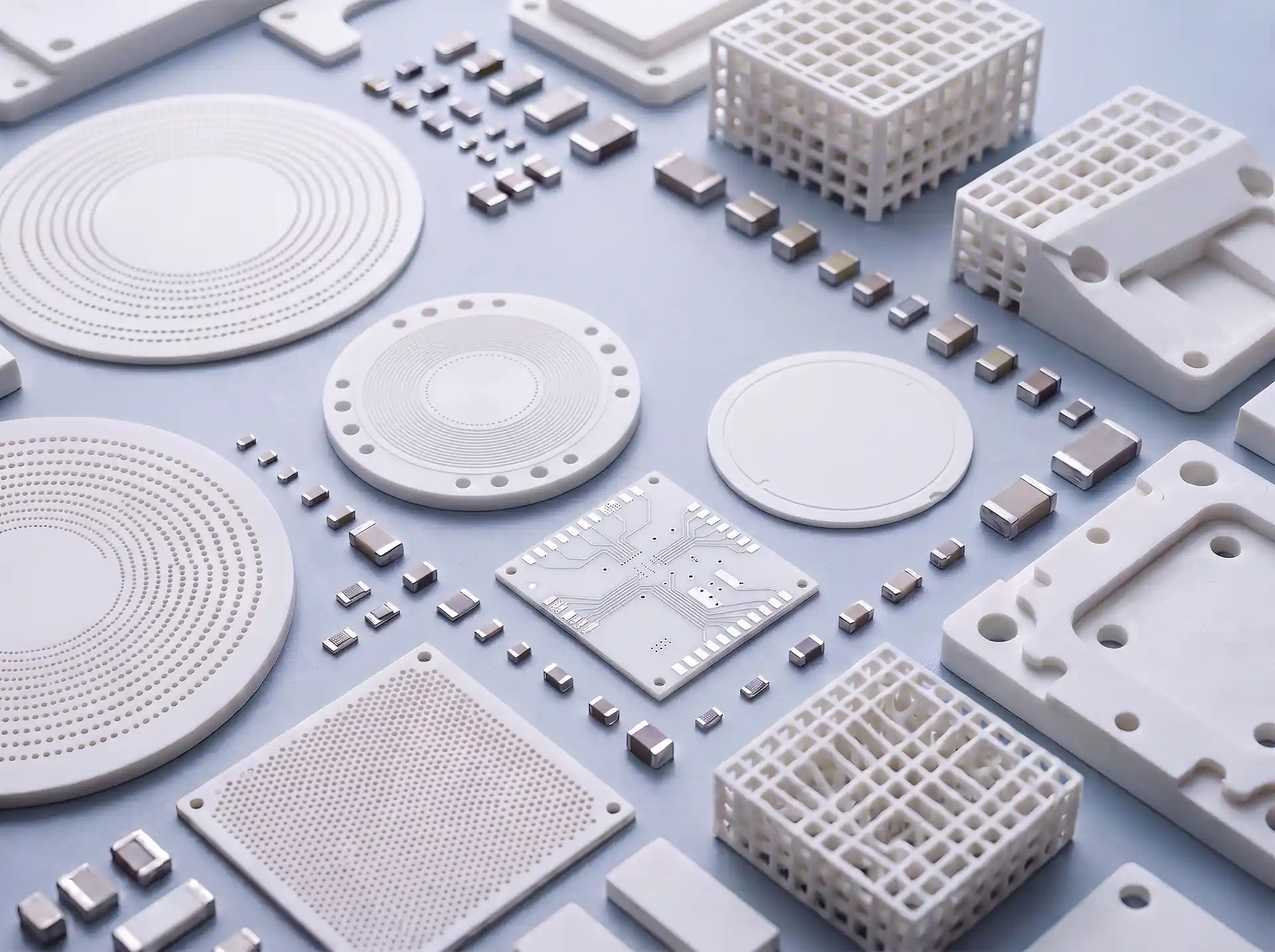
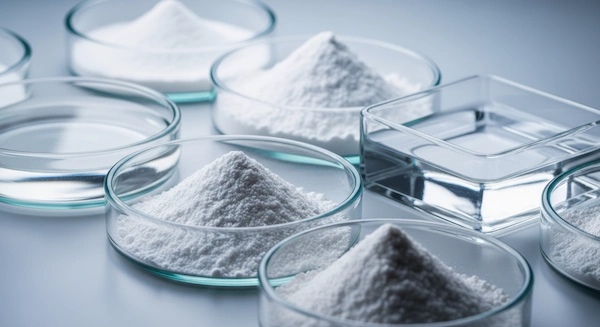
SEKISUI Specialty Chemicals develops and supplies binders and plasticizers for fine ceramics manufacturing, from resin design through production. Our lineup covers both organic solvent and water-based systems. It centers on S-LEC™ B Series polyvinyl butyral (PVB), which balances strength, flexibility, and adhesion. The lineup also includes S-LEC™ S Series modified PVB for printing, S-LEC™ AS Series specialty acrylic resins for low-temperature decomposition and low residue, and water-compatible S-LEC™ KW and KX Series.
Based on your process steps, powder, solvent system, and firing atmosphere, we recommend candidate series and a supply form: powder, granules, or resin solution (vehicle). If standard grades do not meet your requirements, customization is also available.

Fine ceramics production often encounters issues such as unstable slurry viscosity, poor granule flow, uneven die filling, cracking in thin green sheets, stringing during printing, delamination of stacked layers, and residual carbon after debinding. Many of these issues stem from the powder’s dispersion state and the types and amounts of binder, plasticizer, and dispersant used together. A fix in one step can also cause problems in another. For example, adding more binders to improve green strength can increase the debinding residue.
The table below summarizes common symptoms, typical causes, and material-side approaches. Use it as a starting point for the issue you are facing.
| Symptom | Main Causes | Material-Side Approach |
|---|---|---|
| Unstable slurry viscosity | Agglomeration of fine powder, dispersant compatibilityy | Review the binder–dispersant combination |
| Poor granule flow / uneven filling | Insufficient granule strength or shape | Select a suitable granulation binder |
| Cracking in thin green sheets | Low strength or flexibility in thinner layers | Review the combination of binder type and plasticizer |
| Stringing or pattern distortion in printing | Paste elongation behavior and viscosity profile | Select a binder with clean string break in mind |
| Delamination in stacking / cracking in cutting | Interlayer adhesion, flexibility of dried film | Review the combination of binder type and plasticizer |
| Residual carbon or blistering after debinding | Thermal decomposition, firing atmosphere | Select a series based on thermal decomposition |
Fine ceramics are made by dispersing and forming raw powders, then debinding and firing them. The binder does not remain after firing. Before then, it keeps the green body strong, holds its shape, and stabilizes each step. Each step needs different properties:
These properties often involve trade-offs. A choice made in one step can affect later steps, so review the upstream and downstream steps together. The examples below show general directions only. Confirm final suitability by testing your actual formulation and process conditions.
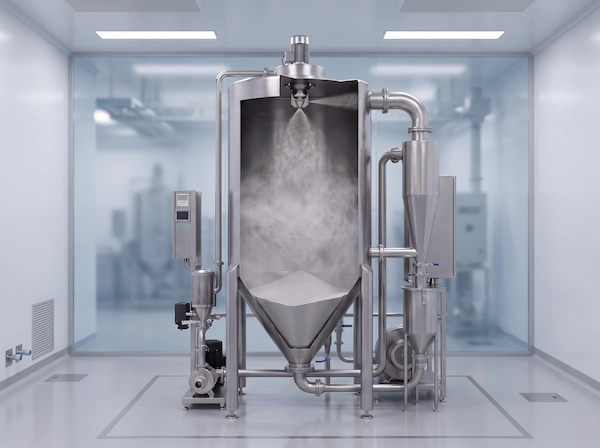
Granulation and pressing require several properties at once. Granules must hold together during transfer, flow evenly into the die, and provide the pressed part with sufficient strength. In water-based spray-dry granulation, PVA (polyvinyl alcohol) is a widely used binder.
If PVA falls short on flexibility or adhesion, S-LEC™ KW and KX Series water-soluble polyvinyl acetals are alternatives to consider, because they are both hydrophilic and hydrophobic. KW Series is for aqueous solutions. KX Series is for formulations that need solubility in both water and alcohol. When you contact us, please share your granulation method, powder type and particle size, slurry concentration, forming method, and your current binder and any issues with it.
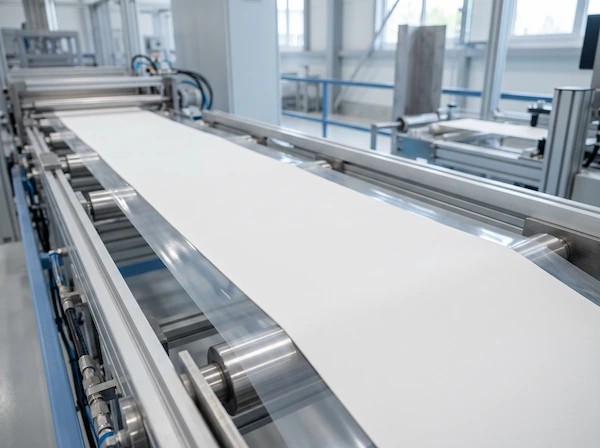
Sheet forming needs even powder dispersion and green sheets that stay strong and flexible as they get thinner. S-LEC™ B Series offers grades with different molecular weights, hydroxyl contents, and Tg. High-molecular-weight types are candidates for strengthening thinner sheets. Low-hydroxyl types are candidates for preventing warpage in applications such as LTCC (low-temperature co-fired ceramics). We can also suggest combinations with S-LEC™ G Series non-phthalate plasticizers.
If you need both sheet strength and good debinding, the high-strength types in S-LEC™ AS Series are another option.
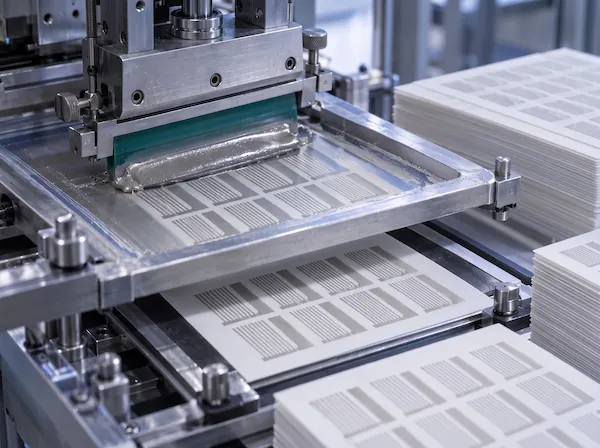
Screen and gravure printing of electrodes and functional layers needs a viscosity profile that limits bleeding and skipping. It also needs to limit stringing and spattering when the screen separates. S-LEC™ S Series modified PVB is designed with elongation behavior during printing in mind, compared with standard PVB resin. In resin film tests under our specified conditions, it showed at least 3.6 times the adhesion and 3 times the strain of ethyl cellulose. We support paste design that accounts for adhesion to green sheets, stacking, and cutting.
To reduce residue after firing, or to fire in nitrogen, S-LEC™ AS Series is also a candidate. Please share your printing method, powder types, solvent, target viscosity range, and line width.
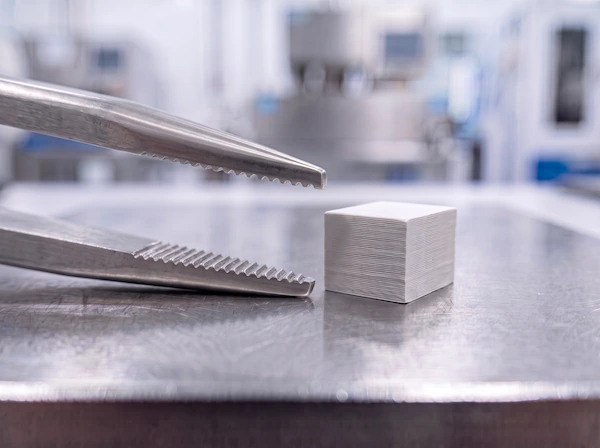
Stacking needs layers that bond firmly at low pressing pressure and stay dimensionally stable during lamination and cutting. Interlayer adhesion depends on the binder and plasticizer in the sheet, as well as on the binder in the electrode paste printed on it.
We look at both together, pairing S-LEC™ B Series and plasticizers on the sheet side with S-LEC™ S Series in the electrode paste. This helps balance printability and interlayer adhesion. If you need stacking adhesion and low residual carbon after debinding, S-LEC™ AS Series is another candidate to consider. Please share the number of layers, pressing pressure and temperature, cutting method, and any current defects such as delamination, cracking, or misalignment.
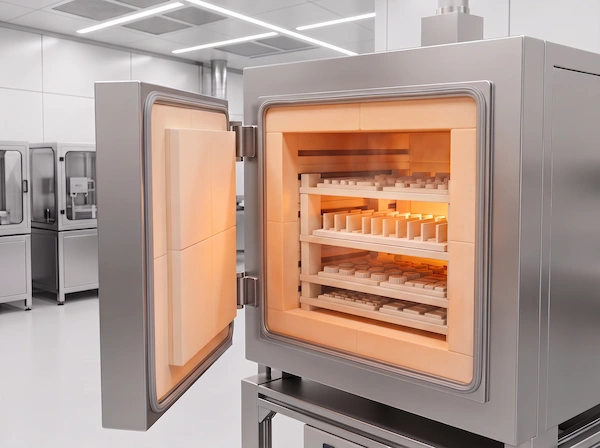
Debinding and firing need binders that decompose easily at low temperatures and leave little residue. This matters most in low-oxygen conditions, such as nitrogen or vacuum, and with non-oxide ceramics like aluminum nitride, or when co-firing with metals like copper. When oxygen is limited, the binder is removed by thermal decomposition rather than combustion. That makes the resin’s decomposition behavior a key factor in residual carbon and blistering.
S-LEC™ AS Series specialty acrylic binders are designed for processes in both air and nitrogen. For moisture-sensitive processes, they are also available as resin solutions in non-alcohol solvents. Please share your firing atmosphere, temperature profile, and co-fired metals.
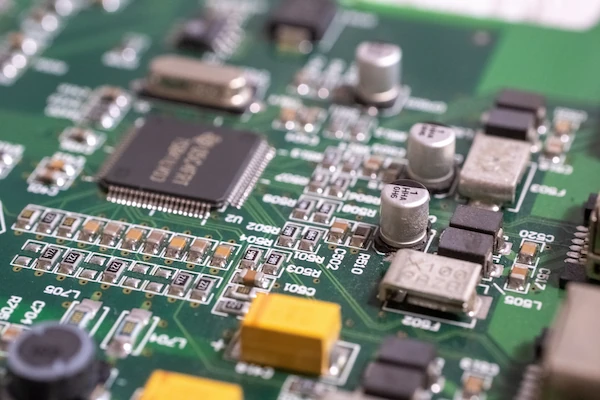
Our binders are used or under evaluation in multilayer ceramic components such as MLCCs (multilayer ceramic capacitors) and in many other fine ceramics products. For MLCCs, we suggest materials step by step: S-LEC™ B Series for dielectric green sheets, S-LEC™ S Series for internal electrode pastes, and S-LEC™ AS Series for external electrodes.
For multilayer ceramic substrates made by HTCC (high-temperature co-fired ceramics) or LTCC (low-temperature co-fired ceramics), the key points are sheet strength, debinding in low-oxygen atmospheres suited to the electrode materials, and fine-line printing. We also suggest materials for aluminum nitride and silicon nitride heat dissipation substrates, electrostatic chucks for semiconductor equipment, and granulated or formed ceramic parts.
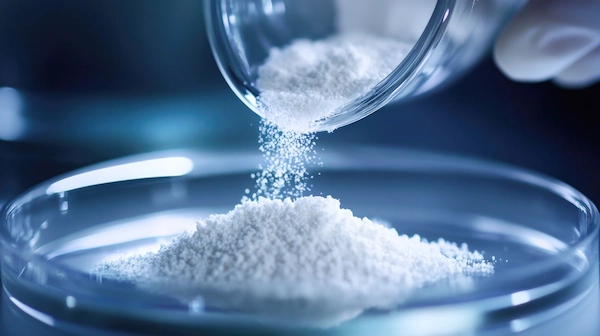
Binder selection depends on both the ceramic powder and the process. For oxide powders such as barium titanate (BaTiO₃), alumina (Al₂O₃), zirconia (ZrO₂), and ferrite, the main questions are dispersion suited to the surface condition and particle size, and the balance between sheet and granule strength. Finer powders agglomerate more easily, so the dispersant combination strongly affects quality.
Non-oxide powders such as aluminum nitride (AlN), silicon nitride (Si₃N₄), and silicon carbide (SiC) are often fired in nitrogen or similar low-oxygen atmospheres. They need binders that decompose cleanly under those conditions, as do processes co-fired with electrode materials such as tungsten, molybdenum, silver, or copper.
Solvents for ceramic slurries and pastes fall into two groups: organic solvents, such as alcohols, ketones, esters, and terpineols, and water. Organic solvent systems offer a wide choice of binders, dry quickly, and support proven formulations for sheet forming and printing. Water-based systems reduce the burden of solvent handling and exhaust treatment, so more customers are considering them to improve working conditions and lower environmental impact. However, water-based systems pose distinct issues, including dispersion stability, drying time, and drying-induced cracking.
Along with S-LEC™ B, K, S, and AS Series for organic solvents, we offer S-LEC™ KW Series for aqueous solutions and S-LEC™ KX Series for water–alcohol systems.
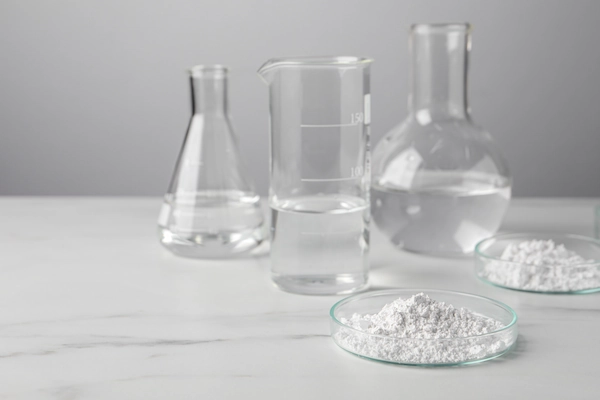
Common binders for fine ceramics include polyvinyl acetal resins (PVB and polyvinyl acetoacetal), acrylic resins, polyvinyl alcohol (PVA), ethyl cellulose, and aliphatic polycarbonates. PVB balances strength, flexibility, and adhesion and is widely used in green sheets and printing pastes. Acrylics and aliphatic polycarbonates decompose readily, so they are considered for low-temperature or nitrogen debinding. PVA is a common choice for water-based granulation and pressing. Ethyl cellulose makes it easy to adjust viscosity and thixotropy and is widely used in printing pastes, but residue can be an issue in low-temperature or nitrogen firing.
Properties of every resin depend on molecular weight and plasticizer. The table shows general trends, and actual selection requires testing.
| Resin System | Main Strengths | Considerations (General Trends) |
|---|---|---|
| PVB / polyvinyl acetoacetal | Balance of strength, flexibility, and adhesion, plus dispersibility | Residual carbon may need attention, depending on firing conditions |
| Acrylic resin | Low-temperature decomposition, low residue, decomposition in nitrogen | Sheet strength or flexibility can be an issue |
| PVA | Water-based, solvent resistance, and strength | Limited to water as a solvent, and flexibility and adhesion can be issues |
| Water-soluble polyvinyl acetal | Acetal-resin adhesion, film strength, and dispersion stability in water-based systems | Water resistance depends on formulation and drying conditions |
| Ethyl cellulose | Easy viscosity and thixotropy control, widely used in printing pastes | Residue can be an issue in low-temperature or nitrogen firing |
| Aliphatic polycarbonate | Low-temperature decomposition, low residue | Process fit and green strength need to be checked |
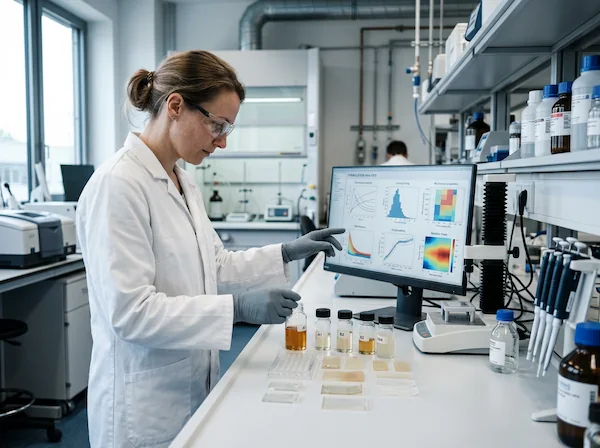
If you have issues with ethyl cellulose or aliphatic polycarbonate, we can suggest series from different resin families to compare. For ethyl cellulose printing pastes with poor adhesion to green sheets, S-LEC™ S Series modified PVB (polyvinyl acetal-based) is a candidate. For aliphatic polycarbonate systems with issues in green strength or coating and printing compatibility, S-LEC™ AS Series specialty acrylic resin is a candidate.
Because the resin families differ, these are not direct drop-in replacements. Solvents, plasticizers, and other formulation elements may need to be revised. After reviewing your formulation, process conditions, and issues, we will suggest how to proceed with evaluation.
| Benchmark Material | Common Issues (General Trends) | Candidate (SEKISUI Specialty Chemicals Resin Family) |
|---|---|---|
| Ethyl cellulose | Adhesion to green sheets, strength, and residue after firing | S-LEC™ S Series (modified PVB / polyvinyl acetal-based) |
| Aliphatic polycarbonate | Green strength, coating and printing compatibility | S-LEC™ AS Series (specialty acrylic resin) |
In high-solids slurries and pastes made with fine ceramic powders, particles agglomerate easily. This can raise viscosity, cause changes over time, clog filters, and lead to uneven coating and defects in thin sheets. Dispersion generally happens in three stages: wetting the powder surface, breaking up agglomerates, and stabilizing the dispersed state. Dispersants contribute mainly to wetting and stabilization. Adding a dispersant also means checking its compatibility with the binder, its effect on dried-film properties, and its behavior during firing.
Our PVB-based dispersants are designed for compatibility with PVB binders, so you can evaluate dispersion and final properties together.
We offer binders and plasticizers for fine ceramics in both organic solvent and water-based systems. For organic solvents, the lineup includes:
For water-based systems, we offer S-LEC™ KW and KX Series water-soluble polyvinyl acetals, SELVOL™ polyvinyl alcohol (PVA), and Ultiloc™ modified PVA copolymers. In combination with S-LEC™ G Series non-phthalate plasticizers, we support the design of the entire slurry. See grade data for details.
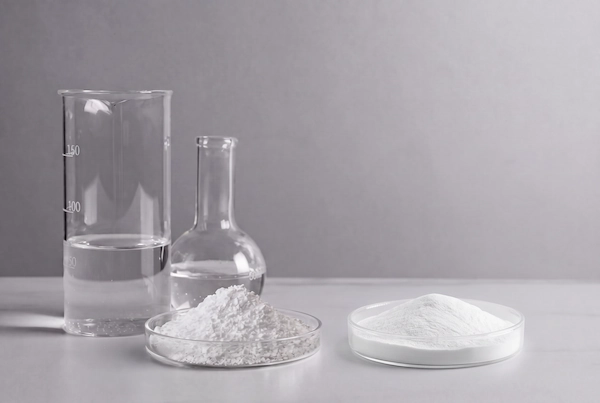
Our binders come in three forms: powder, granules, and resin solution (vehicle). Powder lets you set the solvent and concentration yourself and works with existing dissolution equipment, so it suits customers with in-house dissolving and blending know-how. Granules generate less dust and are easy to weigh and charge, which helps improve the work environment and supports automated charging. Resin solutions eliminate the dissolution step, leave no undissolved resin, and maintain stable viscosity and concentration, helping reduce equipment and labor and speed up startup. Available forms vary by series and grade.
If you are unsure which form fits, please tell us about your process and equipment.
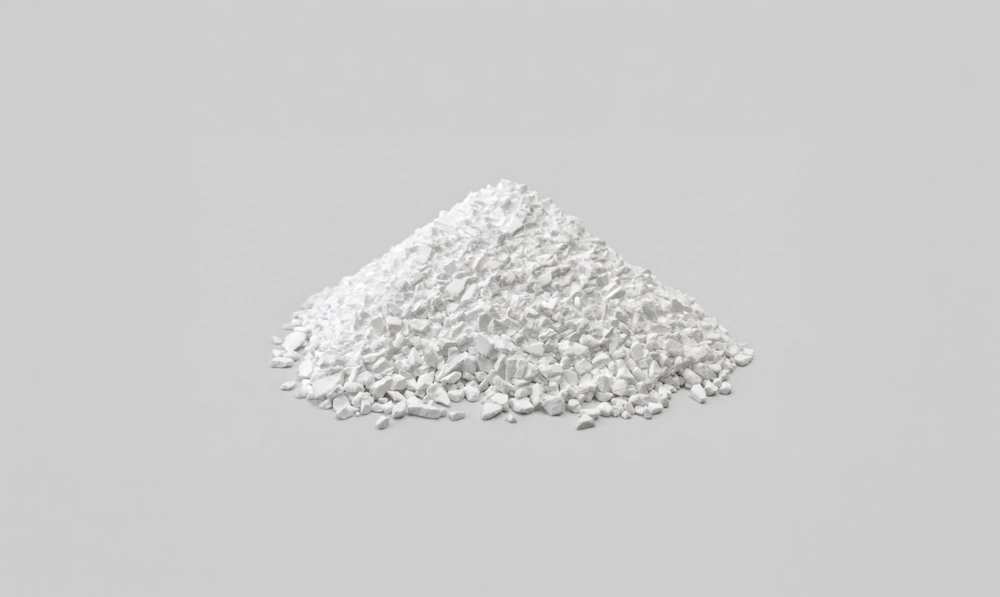
S-LEC™ B Series includes granulated grades. Compared with powder, they release less dust, which helps improve conditions during weighing and charging and reduces cleaning work.
Optimized particle size also improves solvent contact, which can enhance solubility and dispersibility. This helps reduce variation in dissolving and dispersing, supporting process stability and easier handling at scale-up. They are also easy to weigh and charge, making them worth considering if you plan to automate raw material charging. See the grade data for available grades.
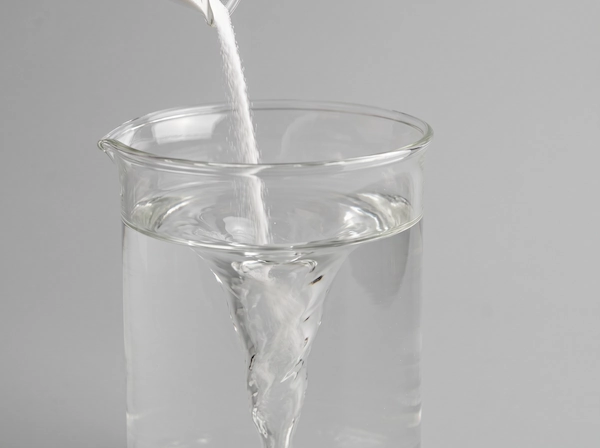
To help you skip the dissolution step, we supply resin solutions (vehicles). S-LEC™ AS Series specialty acrylic resins are supplied mainly as solutions and can be adjusted to your preferred solvent, such as terpineol, butyl acetate, or butyl carbitol, across a wide viscosity range. We can also combine several materials into a single product, such as a PVB-plasticizer solution. This can reduce the dissolving and mixing steps, stabilize quality, and shorten startup time. Please share the materials and approximate blend ratios.
If standard grades do not give you the properties you need, please ask us about customization. As a binder resin developer and manufacturer, we can adjust the resin design itself to your powder, solvent system, and process conditions. This includes molecular weight and degree of polymerization, composition and functional groups, thermal decomposition behavior, and purity. We can also adjust the supply form through solution (vehicle) preparation, plasticizer premixes, or granulation.
Our technical and sales teams work together to support you from evaluation through mass production and stable supply. It is fine if some conditions are not yet defined, and we welcome early-stage, idea-level inquiries.
Q. What causes green sheets to crack?
A. Main causes include lower strength and flexibility as sheets get thinner, stress during drying, and poor powder dispersion. On the material side, a good starting point is to review the combination of binder molecular weight and plasticizer.
Q. Why does debinding in nitrogen leave more residual carbon?
A. When oxygen is limited, the binder is removed by thermal decomposition rather than combustion, so resins that resist decomposition tend to leave residue. S-LEC™ AS Series, which is also designed for nitrogen processes, is a candidate for evaluation.
Q. How do PVB and acrylic binders differ?
A. PVB tends to balance strength, flexibility, and adhesion, while acrylic resins tend to offer good thermal decomposition and low residue. Choose based on the properties your process needs most. The two are sometimes used together.
Q. Do you have binders for spray-dry granulation?
A. Yes. PVA is common in water-based spray-dry granulation. If flexibility or adhesion is an issue, S-LEC™ KW and KX Series water-soluble polyvinyl acetals are alternatives to compare. We will make suggestions based on your granulation method and powder conditions.
Q. Do you offer low-dust granulated binders?
A. Yes. Granulated products are available for some S-LEC™ B Series grades. Please check the grade data for available grades, or contact us.
Q. Can I buy binders as a solution?
A. Yes. S-LEC™ AS Series is supplied mainly as resin solutions (vehicles), with solvent and viscosity adjusted to your needs. For other series, please contact us about what is available.
Q. Do you have binders for water-based ceramic slurries?
A. Yes. Candidates include S-LEC™ KW Series for aqueous solutions and S-LEC™ KX Series for water–alcohol systems. We will suggest an evaluation plan that covers dispersion stability and drying conditions.
Q. How should I choose a plasticizer? Can I switch from DOP or DBP?
A. We review compatibility with PVB, plasticizing effect, volatility, sheet strength, stacking performance, and debinding behavior together. S-LEC™ G Series non-phthalate plasticizers are a candidate, but the same loading may not give the same properties.
Q. Is there an alternative to ethyl cellulose?
A. For printing pastes, S-LEC™ S Series modified PVB is a candidate to compare. Because the resin family differs, it is not a direct drop-in replacement. We will make suggestions based on your formulation and printing conditions.
Q. Can I blend multiple grades?
A. Yes, if they dissolve stably in the same solvent system and give the target properties. Blending changes viscosity, so please consult us in advance.
Q. Are your binders compatible with all ceramic powders?
A. Behavior depends on the powder surface, solvent, dispersant, and plasticizer combination. We recommend a preliminary evaluation using a formulation that closely reflects your actual conditions.
Q. Can you customize if standard grades do not fit?
A. Yes. We can discuss adjusting resin design, such as molecular weight, composition, and thermal decomposition behavior, as well as supply forms such as solutions and granules.